
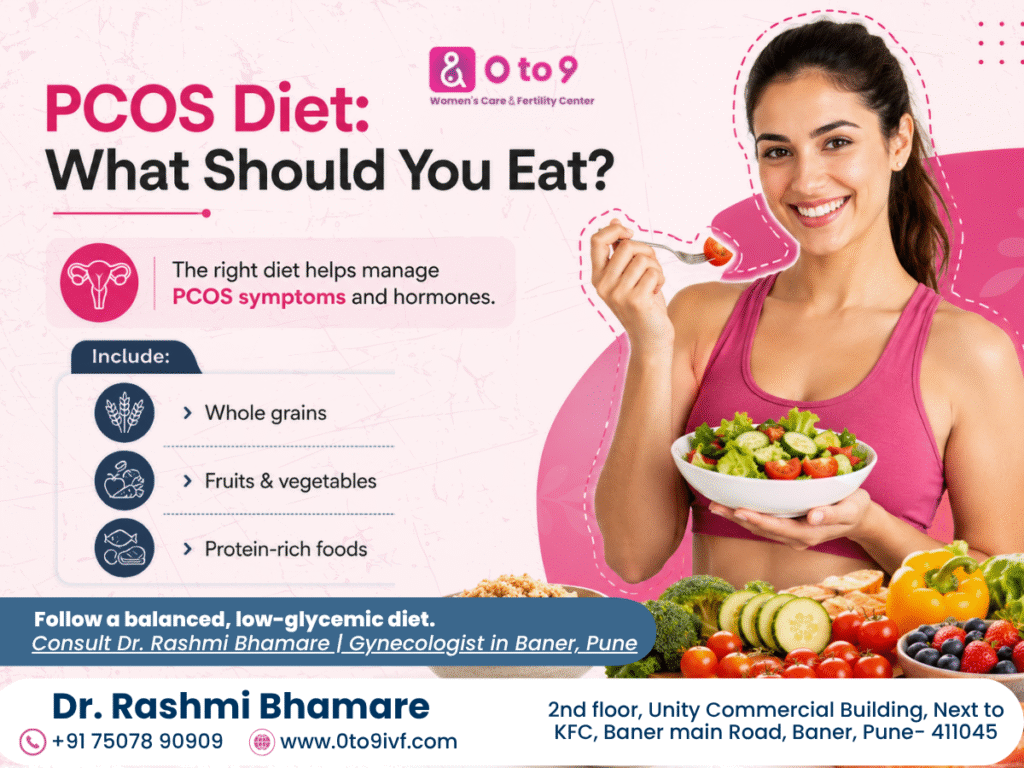
Polycystic Ovary Syndrome (PCOS) is one of the most common hormonal conditions affecting women today. From irregular periods and weight gain to acne and fertility concerns, PCOS can impact overall health and quality of life. The good news is that the right diet and lifestyle changes can help manage PCOS symptoms effectively.
According to Dr. Rashmi Bhamare at 0 to 9 Women’s Care & Fertility Center, a balanced and low-glycemic diet plays an important role in improving hormone balance, insulin resistance, and reproductive health in women with PCOS.
What is PCOS?
PCOS (Polycystic Ovary Syndrome) is a hormonal disorder that can cause:
- Irregular menstrual cycles
- Weight gain
- Acne and oily skin
- Excess facial hair growth
- Difficulty conceiving
- Insulin resistance
Early diagnosis and proper management can help reduce complications and improve overall health.
Why Diet Matters in PCOS
Women with PCOS often experience insulin resistance, where the body struggles to use insulin effectively. This can lead to higher blood sugar levels, weight gain, and worsening hormonal imbalance.
A healthy PCOS diet can help:
- Regulate hormones
- Support healthy weight management
- Improve ovulation
- Reduce inflammation
- Improve fertility outcomes
- Boost energy levels
Best Foods to Include in a PCOS Diet
1. Whole Grains
Whole grains are rich in fiber and help maintain stable blood sugar levels.
Good options include:
- Oats
- Brown rice
- Quinoa
- Whole wheat
- Millets
These foods digest slowly and help reduce insulin spikes.
2. Fruits and Vegetables
Fresh fruits and vegetables are packed with antioxidants, vitamins, and fiber that support hormonal health.
Best choices include:
- Leafy greens
- Broccoli
- Carrots
- Berries
- Apples
- Citrus fruits
Low-glycemic fruits are especially beneficial for women with PCOS.
3. Protein-Rich Foods
Protein helps keep you full for longer and supports balanced blood sugar levels.
Healthy protein sources include:
- Eggs
- Fish
- Chicken
- Lentils
- Beans
- Greek yogurt
- Paneer and tofu
Foods to Avoid in PCOS
To manage PCOS symptoms better, it is important to limit:
- Sugary drinks
- Processed foods
- Refined flour
- Excess junk food
- Fried foods
- Excessive sweets
Reducing these foods can help improve insulin sensitivity and hormone balance.
Lifestyle Tips for Managing PCOS
Along with a healthy diet, these habits can help:
- Exercise regularly
- Sleep for 7–8 hours daily
- Manage stress levels
- Stay hydrated
- Maintain a healthy weight
Small and consistent lifestyle changes can make a significant difference in managing PCOS symptoms.
When to Consult a Gynecologist
If you experience irregular periods, sudden weight gain, acne, or fertility concerns, it is important to seek medical guidance. Proper evaluation and personalized treatment can help manage PCOS effectively.
Dr. Rashmi Bhamare at 0 to 9 Women’s Care & Fertility Center provides expert care for PCOS management, fertility concerns, hormonal imbalance, and women’s health issues.
Conclusion
A balanced PCOS diet rich in whole grains, fruits, vegetables, and protein can help improve hormone balance and overall well-being. Combined with the right medical guidance and healthy lifestyle habits, women with PCOS can manage symptoms more effectively and improve their quality of life.
If you are looking for expert PCOS treatment and women’s healthcare, consult Dr. Rashmi Bhamare at 0 to 9 Women’s Care & Fertility Center.