
Our practice location is now Unity Commercial Building, Baner, Pune: - Learn more

0 to 9 Women’s Care & Fertility Center

Uncategorized

Illustration of sperm movement explaining low sperm motility.

Normal Sperm Count but Low Motility: Can We Conceive Naturally, and What Happens Next?

Yes, natural pregnancy is still possible when sperm count is normal but sperm motility is low. However, reduced sperm movement may make it more difficult for sperm to reach and fertilise an egg. The chances of conception depend on how much motility is reduced, the total number of moving sperm and the reproductive health of

Normal Sperm Count but Low Motility: Can We Conceive Naturally, and What Happens Next? Read More »
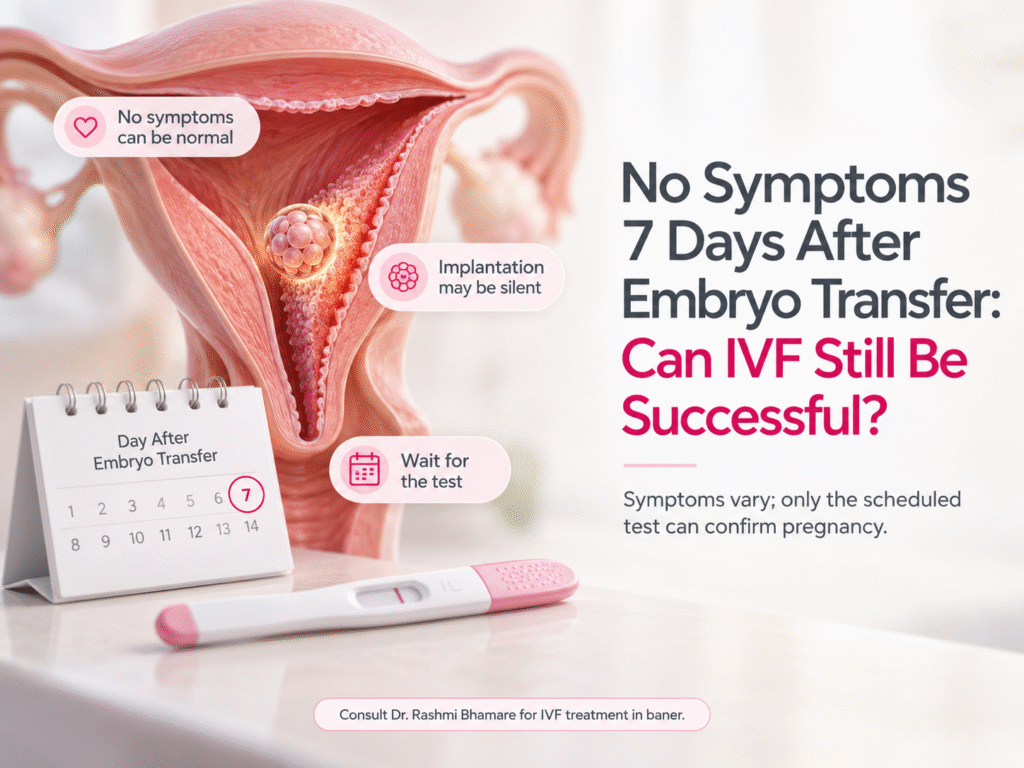
No symptoms 7 days after embryo transfer and the possibility of successful IVF pregnancy.

No Symptoms 7 Days After Embryo Transfer: Can IVF Still Be Successful?

Yes, IVF can still be successful even if you have no pregnancy symptoms seven days after embryo transfer. The absence of cramping, spotting, breast tenderness or nausea does not automatically mean that implantation has failed. Some women experience noticeable changes during the waiting period, while others feel completely normal despite having a positive pregnancy test

No Symptoms 7 Days After Embryo Transfer: Can IVF Still Be Successful? Read More »

Gynaecologist in Baner

Could This Be Perimenopause at 40? Understanding Sleep Problems, Mood Changes and Changing Periods

Yes, perimenopause can begin around age 40, even if you are still having periods. Changes in sleep, mood and menstrual cycles may be early signs of this hormonal transition. However, these symptoms do not automatically mean you are approaching menopause because thyroid disorders, stress, pregnancy and other health conditions can cause similar changes. If you

Could This Be Perimenopause at 40? Understanding Sleep Problems, Mood Changes and Changing Periods Read More »

Two miscarriages in a row and medical tests to investigate recurrent pregnancy loss before trying for another pregnancy.

Two Miscarriages in a Row: What Tests Should You Discuss Before Trying Again?

If you have experienced two miscarriages in a row, you do not necessarily need to wait for a third loss before discussing medical investigations. A gynaecologist can review your pregnancy history, assess possible causes and recommend tests that may help you prepare for another pregnancy. Experiencing repeated pregnancy loss can be physically and emotionally difficult,

Two Miscarriages in a Row: What Tests Should You Discuss Before Trying Again? Read More »

infertility treatment in Baner

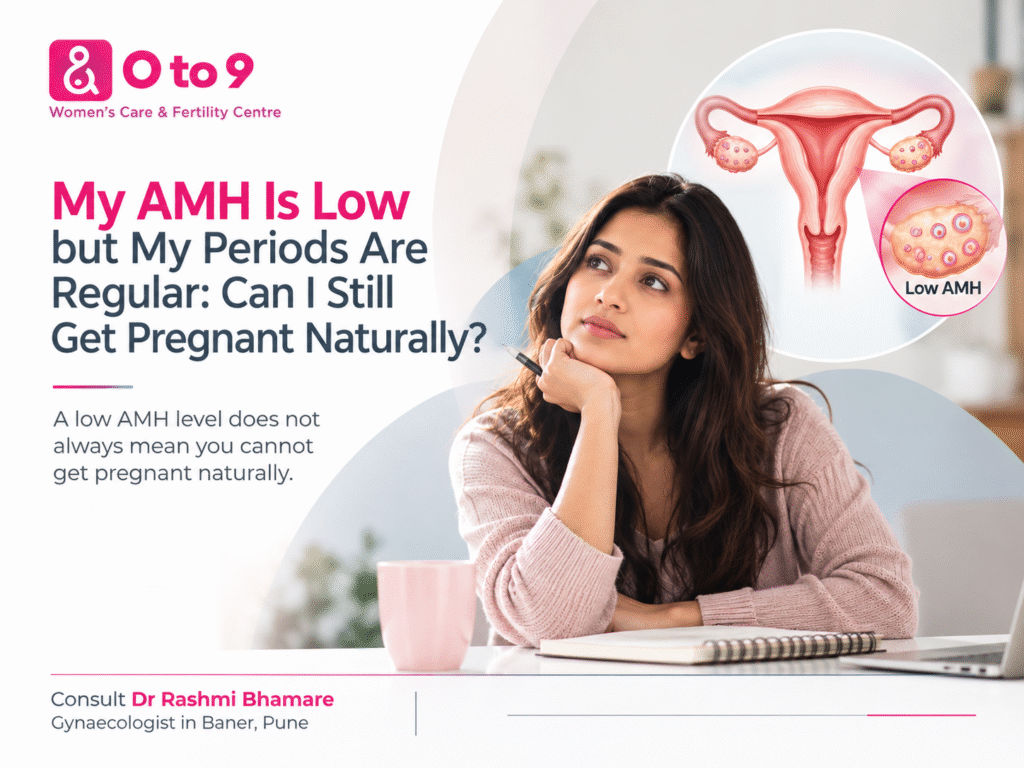
My AMH Is Low but My Periods Are Regular: Can I Still Get Pregnant Naturally?

Yes, getting pregnant naturally is still possible even if your Anti-Müllerian Hormone (AMH) level is low and your periods are regular. A low AMH result may indicate a reduced ovarian reserve, but it does not automatically mean infertility. Regular menstrual cycles are also a reassuring sign that ovulation is likely occurring. Your chances of pregnancy

My AMH Is Low but My Periods Are Regular: Can I Still Get Pregnant Naturally? Read More »

gynaecologist in Baner

Can I Safely Delay My Period for a Festival or Trip? What to Know Before Taking Tablets

For some women, delaying a period with hormonal medicine can be a suitable option after medical assessment. The safest approach depends on your health, usual cycle, pregnancy possibility and any contraception you already use. Treatment needs planning, and it cannot guarantee that you will have no spotting during your event. NHS Whether you are planning

Can I Safely Delay My Period for a Festival or Trip? What to Know Before Taking Tablets Read More »

gynecologist in Pune

Heavy Periods With Large Blood Clots: What Could Be Causing Them, and When Should You See a Gynaecologist?

Understanding Heavy Menstrual Bleeding  Passing an occasional small clot during a period can be normal. When bleeding becomes much heavier than usual, lasts longer, produces repeated large clots or disrupts work and daily activities, it deserves medical attention. Heavy menstrual bleeding is not defined only by an exact amount of blood. Doctors also consider how

Heavy Periods With Large Blood Clots: What Could Be Causing Them, and When Should You See a Gynaecologist? Read More »

IVF treatment in Baner

Fresh vs. Frozen Embryo Transfer: Which Is Better, and Why Might Your IVF Specialist Recommend One Over the Other?

Understanding Embryo Transfer During IVF Treatment in Baner When embryos are ready during an IVF cycle, one of the next decisions is whether to transfer an embryo in the same treatment cycle or freeze it for transfer later. Patients often ask which option is better. The honest answer is that neither fresh nor frozen embryo

Fresh vs. Frozen Embryo Transfer: Which Is Better, and Why Might Your IVF Specialist Recommend One Over the Other? Read More »

Infertility Treatment in Baner

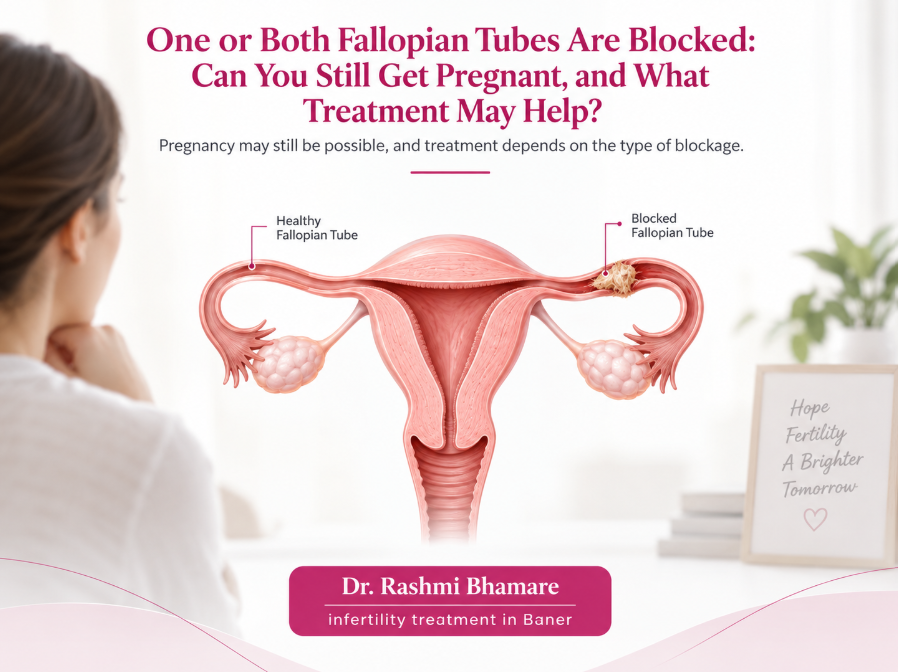
One or Both Fallopian Tubes Are Blocked: Can You Still Get Pregnant, and What Treatment May Help?

Understanding Your Options for Infertility Treatment Hearing that one or both fallopian tubes may be blocked can be upsetting, but it does not automatically mean pregnancy is impossible. The outlook depends on whether the blockage affects one tube or both, where it is located, how damaged the tubes are, your age, ovarian reserve, sperm health

One or Both Fallopian Tubes Are Blocked: Can You Still Get Pregnant, and What Treatment May Help? Read More »

0 to 9 Women’s Care & Fertility Center | Period Late After Emergency Contraceptive Pill

Period Late After Taking an Emergency Contraceptive Pill: What Is Normal and When Should You Test?

Guidance From a Gynaecologist in Baner Taking an emergency contraceptive pill can bring immediate relief after unprotected intercourse or contraceptive failure. However, that relief may turn into anxiety when the next period does not arrive on the expected date. A delayed period after emergency contraception is common. The pill works mainly by delaying or preventing

Period Late After Taking an Emergency Contraceptive Pill: What Is Normal and When Should You Test? Read More »