
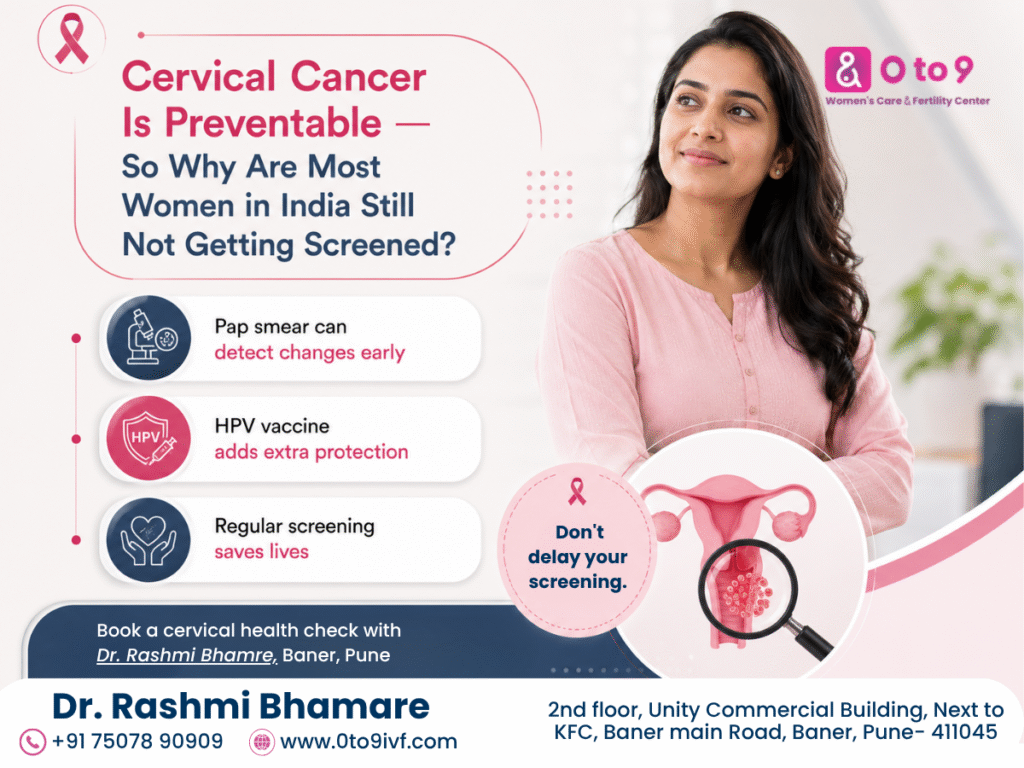
Here is a fact that surprises most people: cervical cancer is one of the few cancers that is almost entirely preventable. With regular screening and timely treatment, it can be caught years before it ever turns into cancer. Yet in India, it remains the second most common cancer among women, and the vast majority of women eligible for screening simply never get tested. Understanding why this gap exists and what to do about it could genuinely save lives.
The Numbers Tell a Troubling Story
Cervical cancer is not a rare disease in India. In 2023 alone, India recorded an estimated 127,526 new cases, with an age-standardized mortality rate of over 11 per 100,000 women, according to global cervical cancer elimination data compiled by the World Health Organization’s cancer research agency. Without stronger intervention, projections suggest millions of Indian women could die from this disease over the coming decades.
What makes this especially frustrating is how preventable it is. Yet a nationally representative study of married Indian women aged 30 to 49 found that only 1.9 percent had ever undergone cervical cancer screening, published in Cancer Research, Statistics, and Treatment in 2025. Even in states with comparatively higher awareness, such as Tamil Nadu, screening rates barely crossed 10.5 percent. In many other states, the figure was closer to 4 to 5 percent. For a disease this preventable, these numbers reveal a massive, largely invisible public health gap.
Why Are So Few Women Getting Screened?
The reasons behind India’s low screening rates are layered, involving awareness, access, and social factors all at once. Some of the most common barriers include:
- Lack of awareness: Many women, especially in rural or semi-urban areas, have never heard of cervical cancer screening or do not know it exists as a preventive option, not just a diagnostic one.
- Absence of symptoms: Early-stage cervical changes rarely cause noticeable symptoms, so women assume they are healthy and see no reason to get tested.
- Social stigma and discomfort: Pelvic examinations are often viewed as embarrassing or inappropriate to discuss, particularly among older generations or in conservative households.
- Limited access to gynecological care: Many smaller towns and rural areas simply do not have easy access to a qualified gynecologist or screening facility nearby.
- Financial and time constraints: Screening requires taking time off work or household responsibilities, and out-of-pocket costs can be a real barrier for lower-income families.
- Fear of a cancer diagnosis: Ironically, fear of finding something wrong stops many women from getting tested in the first place, even though early detection dramatically improves outcomes.
Research also shows that certain behavioural factors, such as tobacco use, are linked with lower screening uptake, while higher education and household wealth are associated with higher screening rates. This suggests the gap is not just about individual choice but about structural access to information and healthcare.
What Does Cervical Cancer Screening Actually Involve?
Many women avoid screening simply because they do not know what to expect. In reality, the process is quick, minimally uncomfortable, and can be completed during a routine visit to a gynecologist. The main screening options include:
- Pap smear test: A sample of cells is gently collected from the cervix and examined under a microscope for abnormal changes, ideally every three years starting around age 21 or from the start of sexual activity.
- HPV DNA testing: This test checks for the presence of high-risk human papillomavirus strains, which are responsible for the vast majority of cervical cancer cases, and is considered more sensitive than older screening methods.
- Visual inspection with acetic acid (VIA): A low-cost method used widely in India’s public health programs, where a diluted vinegar solution is applied to the cervix to highlight abnormal areas visible to the naked eye.
The Government of India introduced a national operational framework in 2016 aimed at improving early detection of oral, breast, and cervical cancers, recognising VIA as a practical, low-cost screening tool suited to large-scale public health use. However, actual uptake of these programs has remained limited outside major screening drives.
Why Early Detection Changes Everything
The biology of cervical cancer works in women’s favour, if screening happens on time. Only about 25 percent of high-risk HPV infections progress to precancerous changes, and roughly 1 percent of those go on to become invasive cancer. This slow progression means there is typically a window of several years during which regular screening can catch abnormal cells long before they become dangerous. This is precisely why consulting a gynecologist in Pune or wherever you live for routine screening, rather than waiting for symptoms to appear, makes such a meaningful difference to long-term outcomes.
When Should You See a Gynecologist for Screening?
As a general guideline, most health bodies recommend:
- Starting Pap smear screening at age 21, or within a few years of becoming sexually active
- Repeating Pap smears every three years for women aged 21 to 29
- From age 30 onward, combining Pap smears with HPV testing every five years, or continuing Pap smears alone every three years
- Continuing screening until at least age 65, unless your doctor advises otherwise based on your history
Beyond routine screening, it is worth booking an appointment with a gynecologist sooner if you experience unusual vaginal bleeding, bleeding after intercourse, persistent pelvic pain, or unusual discharge, even if a screening is not yet due.
Closing India’s Screening Gap Starts With Awareness
Improving cervical cancer screening rates in India requires more than clinical infrastructure. It requires normalising the conversation, making pelvic exams feel less intimidating, and ensuring women know that screening is a preventive, protective step rather than something to fear. Every woman who visits a gynecologist for a routine screening, and every conversation that reduces the stigma around it, moves the needle in the right direction.
Read More –
- Essential Tips for Managing a High Risk Pregnancy Safely
- Navigating High Risk Pregnancy: Expert Guidance and Care in Baner, Pune
- PCOS Won’t Stop Me: A Clear Path to Pregnancy & Motherhood
How 0 to 9 Women’s Care Clinic Can Help
At 0 to 9 Women’s Care Clinic, Dr. Rashmi Bhamre and the team believe that preventive care should never feel intimidating or out of reach. As an experienced gynecologist in Pune, Dr. Rashmi Bhamre offers comfortable, judgement-free cervical cancer screening, including Pap smears and HPV testing, along with clear guidance on how often you should be screened based on your age and health history.
If you have been putting off your screening out of discomfort, fear, or simply not knowing where to start, this is your sign to change that. Book a consultation with a trusted gynecologist in Pune at 0 to 9 Women’s Care Clinic and take a proactive step toward protecting your long-term health.
Frequently Asked Questions
- At what age should women start cervical cancer screening?
Most guidelines recommend starting Pap smear screening at age 21, regardless of sexual activity, and continuing at regular intervals as advised by a gynecologist. Screening frequency may change with age, so it is best to follow a personalised schedule based on your doctor’s recommendation. - Does a normal Pap smear mean I don’t need HPV vaccination?
No. Pap smears detect existing cervical cell changes, while the HPV vaccine helps prevent infection from the virus strains that most commonly cause cervical cancer. The two serve different purposes, and doctors often recommend both vaccination and regular screening for comprehensive protection. - Is cervical cancer screening painful or invasive?
Most women describe screening as a brief moment of discomfort rather than pain. The procedure typically takes only a few minutes and is far less invasive than many women expect, especially when performed by an experienced gynecologist in a comfortable clinical setting.
#CervicalCancerAwareness #GynecologistInPune #WomensHealthIndia #PapSmearMatters #PreventiveHealthcare #HPVAwareness #EarlyDetectionSavesLives #WomensHealth