
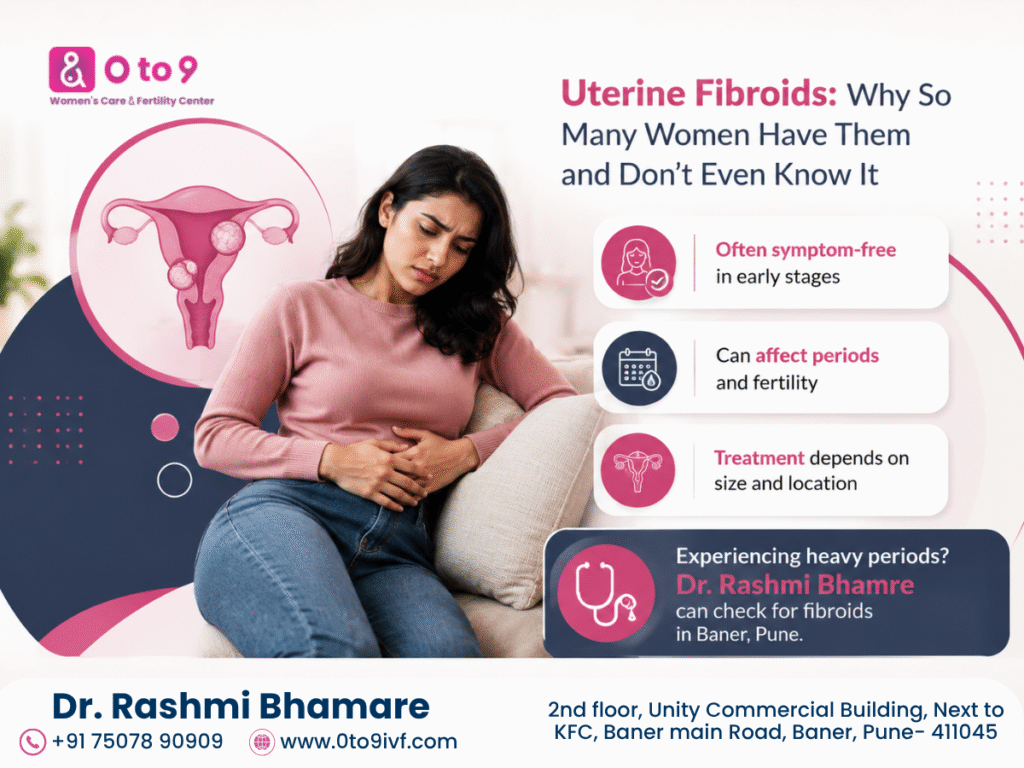
Here is something that surprises most women the first time they hear it: fibroids are not rare. They are one of the most common conditions affecting the female reproductive system, and a huge number of women who have them never even know it. No pain, no obvious symptoms, nothing that would prompt a visit to the doctor. They simply exist, quietly, until a routine scan or an unrelated appointment reveals them.
So why does something this common stay so invisible? Let’s break down what fibroids actually are, why so many go undetected, and when it is worth booking that appointment you have been postponing.
What Exactly Are Uterine Fibroids?
Uterine fibroids, medically known as leiomyomas, are non-cancerous growths that develop in or around the uterus. They can range from as small as a seed to as large as a melon, and a woman can have just one or several at the same time. Despite sounding alarming, fibroids are benign in the vast majority of cases and do not turn into cancer.
What makes them tricky is their sheer unpredictability. Some fibroids cause no symptoms whatsoever, while others can lead to significant discomfort depending on their size, number, and location within the uterus.
Just How Common Are Fibroids, Really?
The numbers here are genuinely striking. Research shows that fibroids affect approximately 40 percent of premenopausal women, and by age 50, nearly half of all women will have developed at least one fibroid, based on findings published in a systematic review in Frontiers in Global Women’s Health. Other studies estimate an even higher lifetime prevalence, citing that the lifetime risk of developing fibroids reaches as high as 70 percent in white women and over 80 percent in women of African ancestry, according to clinical research on fibroid prevalence.
Age plays a major role too. One widely cited US study found that by age 35, approximately 60 percent of Black women and 40 percent of White women had already developed fibroids, with those figures climbing to over 80 percent and roughly 70 percent respectively by age 50.
Why So Many Women Don’t Even Know They Have Them
This is the part that catches most women off guard. Despite how common fibroids are, only around 25 to 50 percent of women with fibroids actually experience symptoms severe enough to seek treatment, according to research published in a US-based survey study. The rest carry fibroids silently, sometimes for years, without ever suspecting anything is there.
A few reasons this happens so often:
- Small fibroids frequently produce no noticeable symptoms at all, especially if they are not pressing against other organs
- Many women normalise heavier or longer periods as simply “how their body is,” rather than recognising it as a potential symptom
- Fibroids often go undetected until an unrelated pelvic ultrasound, fertility evaluation, or annual check-up with a gynecologist happens to reveal them
- Studies have found that women often take an average of over three years to seek treatment after symptoms begin, and many consult more than one healthcare provider before receiving a diagnosis
This delay is part of why regular gynecological checkups matter so much, even when nothing feels obviously wrong. A routine visit to a gynecologist in Pune or wherever you happen to live can catch fibroids long before they cause disruptive symptoms.
Symptoms Worth Paying Attention To
While many fibroids stay silent, others announce themselves clearly. It is worth speaking to a gynecologist if you notice:
- Heavy or prolonged menstrual bleeding, including passing large clots
- Bleeding or spotting between periods
- Pelvic pressure, bloating, or a persistent feeling of fullness in the lower abdomen
- Frequent urination or difficulty fully emptying the bladder due to pressure on the bladder
- Constipation or bowel discomfort caused by fibroids pressing on the rectum
- Pain during intercourse
- Unexplained fatigue or symptoms of anemia caused by chronic heavy bleeding
If any of these sound familiar, it does not automatically mean you have fibroids, but it is a reasonable enough reason to get checked rather than waiting it out.
What Increases the Risk of Developing Fibroids?
Certain factors are consistently linked with a higher likelihood of developing fibroids, including:
- Family history, particularly having a mother or sister with fibroids
- Early age at first menstrual period
- Being overweight or obese
- Approaching or being in your 40s, since prevalence rises with age until menopause
- Not having given birth, as pregnancy and childbirth appear to have some protective effect
None of these factors guarantee you will develop fibroids, and plenty of women with no risk factors develop them too. This unpredictability is exactly why regular screening matters more than trying to self-assess your own risk.
Why Seeing a Gynecologist in Pune Regularly Makes a Real Difference
Because fibroids so often hide without symptoms, the only reliable way to catch them early is through routine gynecological care rather than waiting for a red flag. A pelvic exam combined with an ultrasound, when needed, can identify fibroids well before they grow large enough to cause complications like severe anemia or fertility difficulties. Regular visits to a gynecologist in Pune also give you the chance to track any changes over time, since fibroids can grow, particularly during the reproductive years when estrogen levels are higher.
Read More –
- Stop Wondering: Irregular Periods? Know What Your Body is Saying!
- Do You Have These Symptoms? It Could Be Chocolate Cysts (Endometrioma)
- Who Is at Higher Risk for Ectopic Pregnancy?
How 0 to 9 Women’s Care Clinic Can Help
Fibroids may be common, but that does not mean they should be ignored or left to chance. At 0 to 9 Women’s Care Clinic, Dr. Rashmi Bhamre and the team offer thorough gynecological evaluations, including pelvic exams and ultrasound-based screening, to help detect fibroids early, whether or not you are currently experiencing symptoms.
As an experienced gynecologist in Pune, Dr. Rashmi Bhamre takes the time to explain your specific case clearly, discuss whether treatment is needed at all, and outline the full range of options available if it is, from monitoring to medication to minimally invasive procedures. If you have noticed changes in your periods, unexplained pelvic discomfort, or simply haven’t had a check-up in a while, reach out to 0 to 9 Women’s Care Clinic and speak with a trusted gynecologist in Pune who takes your health seriously.
Frequently Asked Questions
- Do all uterine fibroids need to be treated?
No. Many fibroids are small, asymptomatic, and do not require any treatment beyond regular monitoring. Treatment is generally recommended only when fibroids cause significant symptoms, such as heavy bleeding, pain, or fertility concerns, and the right approach depends on the fibroid’s size, location, and your overall health goals. - Can uterine fibroids affect fertility or pregnancy?
Fibroids can sometimes affect fertility or pregnancy, particularly if they distort the shape of the uterine cavity or block the fallopian tubes, though many women with fibroids conceive and carry pregnancies without complications. A gynecologist can assess whether your specific fibroids may impact fertility and recommend appropriate monitoring or treatment if needed. - How are uterine fibroids diagnosed?
Fibroids are typically diagnosed through a routine pelvic exam followed by an ultrasound, which allows the doctor to confirm the size, number, and location of any fibroids present. In some cases, additional imaging like an MRI may be recommended for a more detailed evaluation before deciding on a treatment plan.
#UterineFibroids #GynecologistInPune #WomensHealth #FibroidAwareness #MenstrualHealth #PCOSandFibroids #WomensWellness #KnowYourBody