
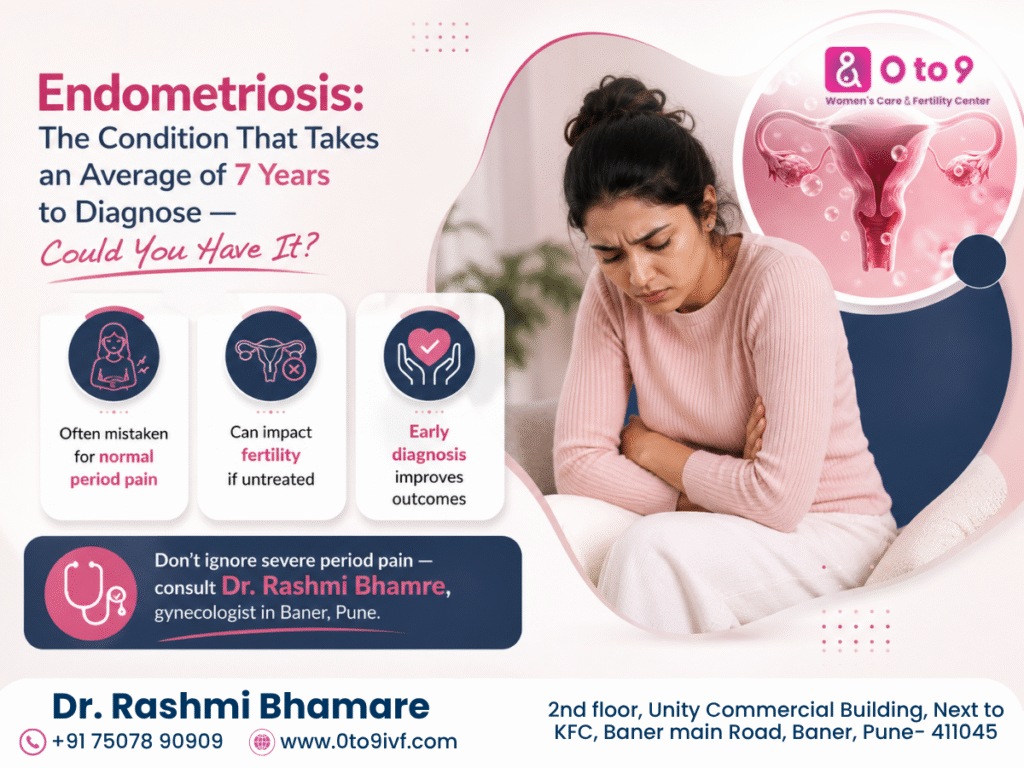
Imagine living with debilitating pain every month, being told it is “just bad periods,” and spending years bouncing between doctors before anyone gives you an actual answer. For millions of women with endometriosis, this is not a hypothetical; it is the reality. Studies consistently show that endometriosis takes an average of 7 to 10 years to diagnose from the time symptoms first begin, and many women see five or more doctors before finally getting a clear answer.
This delay is not because endometriosis is rare. It is because the condition is widely misunderstood, its symptoms are often dismissed, and diagnosis genuinely requires more than a quick conversation. Here is what you need to know, and why seeing the right specialist sooner rather than later matters so much.
What Is Endometriosis, Exactly?
Endometriosis occurs when tissue similar to the lining of the uterus grows outside the uterus, often on the ovaries, fallopian tubes, or pelvic lining. Unlike the tissue inside the uterus that sheds during a normal period, this misplaced tissue has nowhere to go each month, leading to inflammation, scarring, and often significant pain.
Endometriosis is far more common than most people assume. It affects roughly 1 in 10 women of reproductive age globally, according to research published in a comprehensive review on diagnostic delay, though some researchers believe the true number is higher since so many cases go undiagnosed for years or are never diagnosed at all.
Why Does Diagnosis Take So Long?
This is the question that frustrates patients and researchers alike. A systematic literature review found diagnosis times ranging anywhere from a few months to as long as 12 years, depending on the country, healthcare system, and how “time to diagnosis” was even measured. Another large cohort study specifically tracking endometriosis patients found an average diagnostic delay of 10 years, with women typically seeing multiple healthcare providers before receiving a confirmed diagnosis.
A few key reasons explain why this gap exists:
- Symptoms overlap with other conditions: Pelvic pain, heavy periods, and digestive discomfort can just as easily be attributed to IBS, ovarian cysts, or general menstrual cramps, making endometriosis easy to overlook initially
- Normalisation of period pain: Many women are told, sometimes from a young age, that painful periods are simply normal, which delays them from seeking help in the first place
- Diagnostic limitations: A definitive diagnosis traditionally requires a laparoscopic surgical procedure to confirm the presence of endometrial-like tissue, which is a bigger step than most initial doctor visits lead to
- Lack of a single defining symptom: Because endometriosis can present differently in different women, from pelvic pain to fertility struggles to digestive issues, there is no one symptom that instantly signals the condition
- Limited awareness among both patients and some healthcare providers: Despite affecting millions of women worldwide, endometriosis has historically received a fraction of the research funding and clinical attention given to other conditions of comparable prevalence
Encouragingly, some recent research suggests the diagnostic gap may be narrowing in certain regions, with more contemporary studies reporting shorter average delays than older data, likely due to increased awareness and improved screening practices.
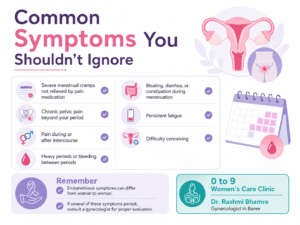
Common Symptoms You Shouldn’t Ignore
Because endometriosis symptoms vary so widely, it helps to know the fuller picture rather than looking for just one telltale sign. Common symptoms include:
- Severe menstrual cramps that do not improve with over-the-counter pain relief
- Chronic pelvic pain that persists beyond your period
- Pain during or after intercourse
- Heavy menstrual bleeding or bleeding between periods
- Digestive symptoms such as bloating, diarrhea, or constipation, especially around your period
- Fatigue that feels disproportionate to your activity level
- Difficulty conceiving, since endometriosis is linked to infertility in up to half of affected women
If several of these symptoms sound familiar and have been part of your life for a while, it may be worth raising endometriosis specifically as a possibility during your next visit to a gynecologist, rather than waiting for it to come up on its own.
Could You Have Endometriosis? Signs Worth a Closer Look
While only a proper clinical evaluation can confirm a diagnosis, certain patterns tend to raise suspicion for endometriosis specifically, including pain that consistently worsens around your period, pain that has gradually intensified over the years, or pelvic pain that does not respond to standard treatments for period cramps. A family history of endometriosis can also raise your likelihood of developing the condition.
This is exactly the kind of pattern that benefits from a thorough conversation with a gynecologist in Baner or your local specialist, someone who can take your full symptom history seriously and guide you toward appropriate testing, whether that is an ultrasound, an MRI, or in some cases, a laparoscopic evaluation.
Why Timely Diagnosis Matters So Much
Endometriosis is a progressive condition, meaning that the longer it goes undiagnosed and untreated, the more it can affect quality of life, fertility, and long-term pelvic health. Getting a diagnosis is not just about naming the problem; it opens the door to actual treatment options, from pain management and hormonal therapy to more targeted surgical approaches, depending on the severity of your case. This is why consulting an experienced gynecologist in Baner sooner rather than later can make a genuine difference in how much this condition impacts your life going forward.
How 0 to 9 Women’s Care Clinic Can Help
If you have spent years being told your pain is “normal,” it might be time for a second opinion. At 0 to 9 Women’s Care Clinic, Dr. Rashmi Bhamre and the team take menstrual pain and pelvic symptoms seriously, offering thorough evaluations rather than dismissing symptoms as routine period discomfort.
As a trusted gynecologist in Baner, Dr. Rashmi Bhamre works closely with patients to understand their full symptom history, recommend appropriate diagnostic steps, and build a personalized treatment plan if endometriosis or another underlying condition is identified. You do not have to wait years for answers. If persistent pelvic pain, heavy periods, or fertility struggles have been part of your life for too long, reach out to 0 to 9 Women’s Care Clinic and speak with a gynecologist in Baner who will actually listen.
Frequently Asked Questions
- How is endometriosis diagnosed?
Endometriosis is typically suspected based on symptom history and confirmed through imaging such as ultrasound or MRI, though a definitive diagnosis traditionally requires a laparoscopic surgical procedure. A gynecologist will usually start with a detailed symptom review and imaging before determining whether further investigation is needed. - Can endometriosis be treated without surgery?
Yes, many women manage endometriosis symptoms with hormonal therapy, pain management, and lifestyle adjustments without requiring surgery. Surgical treatment is generally reserved for more severe cases, fertility concerns, or when other treatments have not adequately controlled symptoms. - Does endometriosis always cause infertility?
No, not every woman with endometriosis experiences fertility difficulties, though the condition is associated with infertility in up to half of affected women. Many women with endometriosis do conceive naturally or with the help of fertility treatments, so a diagnosis does not automatically mean infertility.
#EndometriosisAwareness #GynecologistInBaner #WomensHealth #ChronicPelvicPain #PeriodPainIsNotNormal #EndoWarrior #FertilityAwareness #WomensWellness