
When Recurring Vaginal Symptoms Need a Gynecologist in Pune
Itching, unusual discharge or an unpleasant vaginal odor that appears after every period can be frustrating. You may use an antifungal cream, feel better temporarily and then notice the same symptoms after the next menstrual cycle.
This pattern does not always mean that the previous treatment failed. Menstruation can temporarily alter the vaginal environment, but recurring symptoms may also indicate an incorrect diagnosis, incomplete treatment, an underlying health condition or sensitivity to menstrual products.
Bacterial vaginosis, commonly called BV, and vaginal yeast infections are different conditions. They can cause overlapping symptoms but require different treatments. Consulting a Gynecologist in Pune is important when symptoms repeatedly return instead of relying on the same medicine each month.
Is It BV, a Yeast Infection or Something Else?
A healthy vagina contains protective bacteria, particularly Lactobacillus species, that help maintain an acidic environment. BV develops when this balance changes and certain anaerobic bacteria multiply. A yeast infection occurs when Candida, a type of fungus normally present in small amounts, grows excessively.
Although both conditions affect the vaginal area, their usual symptoms differ:
- Bacterial vaginosis: BV commonly causes thin, white or gray discharge and a noticeable fishy odor. The odor may become stronger after sex or around menstruation. Itching can occur, but it is not always prominent.
- Yeast infection: A yeast infection usually causes intense itching, soreness, vulvar redness and thick white discharge. The discharge often has little or no strong odor. Urination or intercourse may feel uncomfortable.
- Other conditions: Trichomoniasis, cervicitis, sexually transmitted infections, urinary infections, vulvar eczema and irritation from soaps or sanitary products can produce similar symptoms.
The Centers for Disease Control and Prevention explains that medical history alone may be insufficient to diagnose the cause of vaginitis. Examination and appropriate laboratory testing may be needed because discharge, itching and burning are not specific to one condition.
Why Can Symptoms Return After Every Period?
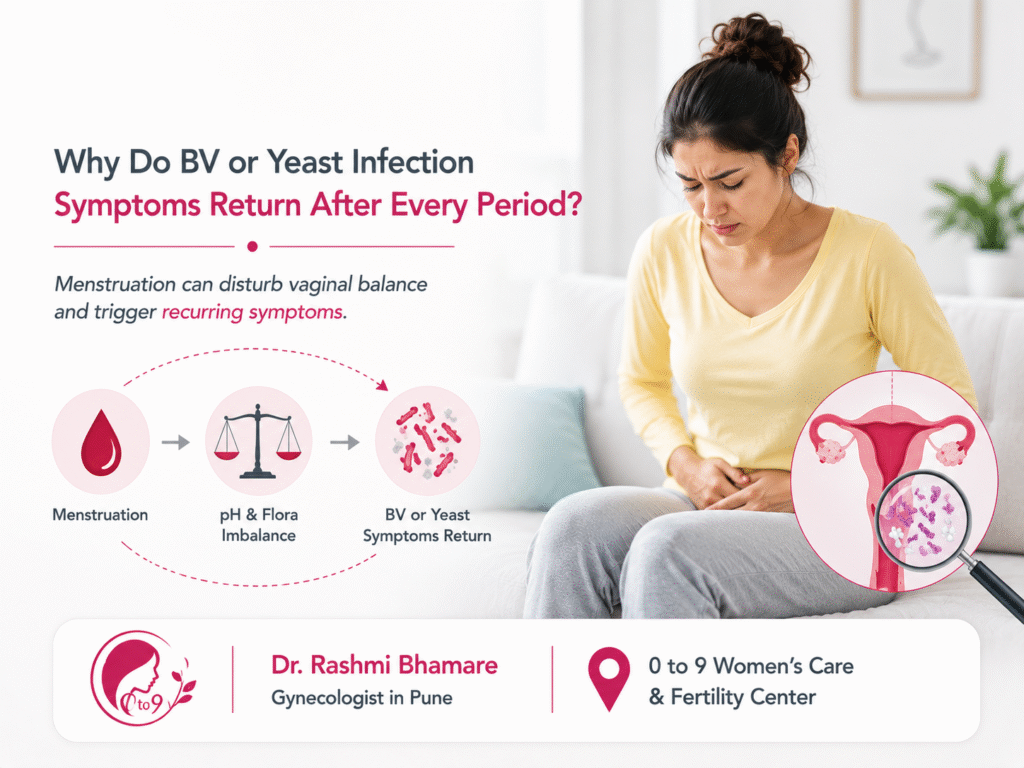
The menstrual cycle affects hormones, vaginal moisture and acidity. For some women, these temporary changes may make an existing imbalance more noticeable.
Common reasons for recurring symptoms include:
- Menstrual blood temporarily changes vaginal acidity
The vagina normally maintains an acidic pH that supports protective Lactobacillus bacteria. Menstrual blood is less acidic and may temporarily raise vaginal pH.
The CDC’s bacterial vaginosis guidelines state that BV prevalence increases during menstruation. This helps explain why fishy odor or thin discharge may become more noticeable during or immediately after a period. - Protective bacteria have not fully recovered
BV is not simply an infection caused by one bacterium. It represents a broader change in the vaginal microbiome. Treatment may reduce the bacteria associated with BV, but the protective bacterial balance may take time to re-establish.
BV can therefore return even after correctly completed antibiotic treatment. Repeated short courses without confirming the diagnosis may not adequately address persistent or recurrent BV. - The condition may have been incorrectly identified
Many women assume that all itching and discharge indicate a yeast infection. However, BV, yeast, trichomoniasis, contact dermatitis and some sexually transmitted infections can feel similar.
The CDC advises that women whose symptoms persist after an over the counter yeast treatment, or recur within two months, should receive a clinical evaluation and testing. Repeated antifungal treatment will not improve BV and may delay the correct diagnosis. - Sanitary pads or intimate products may be causing irritation
Fragranced pads, panty liners, tampons, intimate washes and perfumed wipes may irritate sensitive vulvar skin. Prolonged moisture, friction and reduced airflow during menstruation can make irritation worse.
This can cause itching, burning and redness that resemble a yeast infection even when no infection is present. - The full treatment course was not completed
Symptoms may improve before the infection or imbalance has been adequately treated. Stopping medication early, missing doses or using a treatment for fewer days than prescribed may allow symptoms to return.
Some topical products can also be washed away or become difficult to use during heavy menstrual bleeding. A Gynecologist in Pune can advise whether treatment should begin immediately or be timed differently. - Antibiotics may be promoting yeast overgrowth
Antibiotics are sometimes necessary for bacterial infections, including BV. However, they may also reduce protective bacteria and create an opportunity for Candida to multiply.
A woman may therefore complete BV treatment and subsequently develop genuine yeast symptoms. This is one reason testing is valuable when symptoms change after treatment. - Diabetes or high blood sugar may be contributing
Poorly controlled diabetes can increase susceptibility to recurrent yeast infections. Persistently high glucose levels may support yeast growth and affect the body’s ability to control infection.
Frequent urination, increased thirst, unexplained fatigue or repeated yeast infections may prompt a doctor to recommend blood sugar testing. - A different Candida species may be present
Standard antifungal treatments work well for many uncomplicated Candida albicans infections. However, other Candida species may respond differently.
According to the CDC, non albicans Candida species are found in approximately 10 to 20 percent of women with recurrent vulvovaginal candidiasis. A vaginal culture may help identify the species when standard treatment repeatedly fails.
When Is a Yeast Infection Considered Recurrent?
The CDC generally defines recurrent vulvovaginal candidiasis as three or more symptomatic episodes within one year. It affects fewer than 5 percent of women, but it can significantly affect comfort, sleep, sexual health and quality of life.
Some cases are associated with frequent antibiotic use, diabetes, pregnancy, immune system conditions or corticosteroid treatment. However, many women with recurrent yeast infections have no obvious underlying medical problem.
Recurrent symptoms should ideally be confirmed with examination, microscopy, culture or another appropriate test before long term treatment is considered.
How Does a Gynecologist Diagnose Recurring Vaginal Symptoms?
Dr. Rashmi Bhamare may begin by asking about the timing of symptoms, discharge characteristics, menstrual products, recent antibiotics, sexual history, contraceptive use and previous treatments.
A pelvic examination allows the doctor to assess the vulva, vagina and cervix for discharge, redness, inflammation or skin changes. Vaginal pH testing and microscopic examination may help distinguish BV from candidiasis. A vaginal swab, culture or molecular test may be recommended when symptoms are severe, persistent or repeatedly returning.
Testing for sexually transmitted infections may also be appropriate depending on symptoms and individual risk. Blood sugar testing can be considered when recurrent yeast infections are accompanied by diabetes symptoms or relevant risk factors.
How Are Recurrent BV and Yeast Infections Treated?
Treatment depends on confirming which condition is present.
BV is generally treated with an appropriate antibiotic prescribed as an oral medicine, vaginal gel or cream. When BV returns repeatedly, a Gynecologist may consider a longer or suppressive treatment plan. The exact approach should be individualized because repeated antibiotics are not appropriate for every episode of vaginal discomfort.
A confirmed yeast infection requires antifungal treatment. Recurrent Candida albicans infections may need a longer initial course followed by maintenance treatment under medical supervision. Persistent cases may require culture and antifungal susceptibility testing.
Boric acid vaginal capsules are sometimes discussed online for recurring infections. They should not be used without medical advice because they can be harmful if swallowed, are unsuitable in certain situations and may not be appropriate during pregnancy.
Can Recurring Symptoms Be Prevented?
Not every recurrence can be prevented, but a few practical changes may reduce irritation and support vaginal health.
Wash the external genital area gently with water or a mild, fragrance free cleanser. Avoid douching, vaginal deodorants and internal cleansing products. Change menstrual products regularly and consider trying an unscented alternative if symptoms consistently appear with a particular pad or liner.
Wear breathable underwear and change out of damp clothing promptly. If antibiotics are prescribed, take them only as directed. Do not use antifungal creams every month unless a clinician has confirmed recurrent yeast infection and advised a specific treatment plan.
Evidence for over the counter probiotics as a replacement treatment for active BV or yeast infection remains limited. They should not delay medical assessment when symptoms keep returning.
When Should You Consult a Gynecologist in Pune?
Arrange a medical consultation if you experience:
- Symptoms that return after every period or recur within two months of treatment
- Three or more suspected yeast infections within one year
- Strong vaginal odor, persistent itching or unusual discharge
- Pelvic pain, fever, pain during sex or burning during urination
- Bleeding between periods or after intercourse
- Symptoms during pregnancy or while trying to conceive
- Repeated treatment failure or symptoms that worsen after medication
Severe pelvic pain, heavy abnormal bleeding, fever, dizziness or feeling significantly unwell requires prompt medical attention.
Consult Dr. Rashmi Bhamare, Gynecologist in Pune
Recurring vaginal symptoms should not become a monthly cycle of guessing and self treatment. Identifying whether the cause is BV, candidiasis, irritation or another condition is the first step towards effective care.
At 0 to 9 Women’s Care & Fertility Center, Dr. Rashmi Bhamare provides evaluation and individualized treatment for recurrent vaginal discharge, itching, infections and menstrual health concerns. If you are looking for a gynecologist in Pune, the clinic can help confirm the diagnosis, assess possible triggers and recommend an evidence based treatment plan.
This information is intended for general education and should not replace an individual medical consultation.
Frequently Asked Questions
1. Why do I get a fishy vaginal odor after every period?
Menstrual blood can temporarily raise vaginal pH, making BV related bacteria and odor more noticeable. A recurring fishy smell, especially with thin gray or white discharge, should be evaluated by a Gynecologist in Pune rather than repeatedly treated as a yeast infection.
2. Can sanitary pads cause yeast infection symptoms?
Pads do not necessarily cause a true yeast infection, but fragranced materials, trapped moisture and friction can irritate vulvar skin. This irritation may cause itching, redness and burning that resemble candidiasis. Examination can help distinguish infection from contact dermatitis.
3. Should I use antifungal medicine every month after my period?
No. Monthly self treatment is not recommended unless recurrent yeast infection has been confirmed and a doctor has prescribed a maintenance plan. Similar symptoms can be caused by BV, sexually transmitted infections or skin irritation, none of which will improve with routine antifungal medicine.