
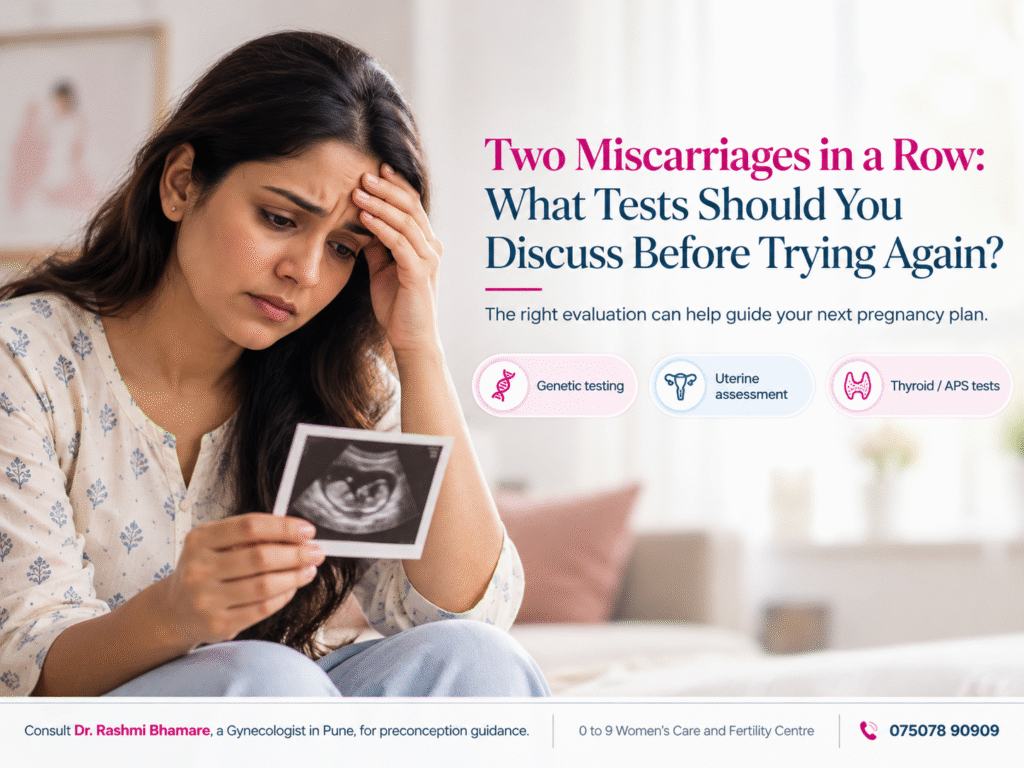
If you have experienced two miscarriages in a row, you do not necessarily need to wait for a third loss before discussing medical investigations. A gynaecologist can review your pregnancy history, assess possible causes and recommend tests that may help you prepare for another pregnancy.
Experiencing repeated pregnancy loss can be physically and emotionally difficult, especially when you are unsure why it happened. Although some miscarriages result from random chromosome changes, others may be associated with uterine conditions, hormonal problems or certain blood clotting disorders.
The purpose of an evaluation is not to order every available test. It is to identify investigations that may provide useful answers and guide future pregnancy care.
Is Two Miscarriages in a Row Considered Recurrent Pregnancy Loss?
Yes. The American Society for Reproductive Medicine (ASRM) and the American College of Obstetricians and Gynecologists (ACOG) define recurrent pregnancy loss as two or more miscarriages.
However, guidelines are not identical worldwide. The Royal College of Obstetricians and Gynaecologists (RCOG) uses three or more early miscarriages as its formal definition but supports earlier evaluation after two when the clinical history suggests an underlying problem.
This means you can discuss investigations after two pregnancy losses rather than assuming another miscarriage must happen before seeking help.
Your age, pregnancy history, gestational age at each loss and existing medical conditions help determine the most appropriate evaluation.
Why Can Two Miscarriages Happen Consecutively?
The most common cause of early miscarriage is a chromosome abnormality in the developing embryo.
Chromosomes carry genetic information needed for normal development. Sometimes an embryo receives an incorrect number of chromosomes during fertilisation, preventing the pregnancy from developing normally.
These changes often happen randomly and become more common as maternal age increases.
Other possible contributing factors include uterine abnormalities, antiphospholipid syndrome, uncontrolled thyroid disease and poorly controlled diabetes.
However, repeated miscarriages do not automatically mean that one of these conditions is present. Sometimes investigations do not identify a specific cause.
The ACOG guidance on repeated miscarriages explains that many women with unexplained recurrent pregnancy loss subsequently have successful pregnancies.
What Tests Should You Discuss After Two Miscarriages?
A specialist may recommend a combination of investigations depending on your history and previous reports. The following tests are particularly relevant to discuss.
1. Genetic Testing of Miscarriage Tissue
Chromosome abnormalities are a leading cause of early pregnancy loss.
Testing pregnancy tissue can sometimes identify whether a miscarriage resulted from an abnormal number or arrangement of chromosomes.
The updated 2026 ASRM guidance recommends offering chromosome analysis of miscarriage tissue when feasible, including at the second miscarriage.
However, testing is only possible when suitable tissue is available. If your earlier miscarriages were not tested, a specialist can discuss alternative steps rather than assuming a genetic cause.
2. Ultrasound or Uterine Cavity Assessment
Certain structural conditions affecting the uterus may contribute to pregnancy loss.
These include:
- A uterine septum, where tissue divides part of the uterine cavity.
- Fibroids that distort the uterine cavity.
- Scar tissue or adhesions inside the uterus.
A pelvic ultrasound is often an initial investigation. Depending on the findings, a saline infusion sonogram, three-dimensional ultrasound or hysteroscopy may be considered.
Not every uterine abnormality requires treatment, and the potential benefit of a procedure depends on the specific finding.
3. Antiphospholipid Antibody Tests
Antiphospholipid syndrome (APS) is an autoimmune condition associated with abnormal blood clotting and certain pregnancy complications.
When APS is suspected, doctors may discuss blood tests for lupus anticoagulant, anticardiolipin antibodies and anti-beta-2 glycoprotein I antibodies.
These tests are not automatically necessary for everyone after two early miscarriages. Their usefulness depends on your clinical history, such as previous blood clots, later pregnancy losses or other findings suggesting APS.
A diagnosis requires the appropriate clinical findings and persistently positive antibody results, usually confirmed through repeat testing at least 12 weeks apart.
The ASRM recurrent pregnancy loss guidance recommends selective APS testing rather than indiscriminate screening.
4. Thyroid and Blood Sugar Tests
Hormonal and metabolic health can affect pregnancy outcomes.
A thyroid-stimulating hormone (TSH) blood test may be recommended, particularly when previous miscarriage tissue was not genetically tested, chromosome testing was normal or thyroid problems are suspected.
If you have diabetes risk factors, a doctor may recommend an HbA1c test to assess your average blood sugar levels.
Additional hormonal investigations, such as prolactin testing, are generally considered when symptoms or menstrual irregularities suggest a possible problem.
These investigations help identify treatable medical conditions, but they should be selected according to individual needs.
5. Parental Chromosome Testing
Occasionally, one partner carries a balanced chromosome rearrangement without having any health problems.
This can sometimes lead to an embryo receiving an unbalanced chromosome arrangement.
A blood test called parental karyotyping may be considered when miscarriage tissue shows certain chromosome abnormalities or when suitable tissue testing was unavailable.
It is not necessarily required for every couple. Genetic counselling can help explain the findings and their possible implications for future pregnancies.
Are There Tests You May Not Need?
After repeated miscarriages, it can be tempting to undergo extensive testing to find an explanation. However, more tests do not always provide better answers.
According to the 2026 ASRM recommendations, routine screening for inherited thrombophilia, MTHFR gene variants, natural killer cells and broad immune abnormalities is generally not recommended as part of recurrent pregnancy loss evaluation.
Similarly, ovarian reserve tests such as AMH are not routinely recommended solely to investigate recurrent miscarriage.
Unnecessary investigations can produce confusing results, increase costs and sometimes lead to treatments that have not been shown to improve pregnancy outcomes.
Ask your specialist how each proposed test could influence your treatment plan.
If a Cause Is Found, Can Treatment Reduce the Risk of Another Miscarriage?
Treatment depends on the underlying condition.
For example, women with confirmed antiphospholipid syndrome may benefit from medically supervised aspirin and heparin treatment. Thyroid disease or diabetes may require better control before conception.
Selected uterine abnormalities may also be considered for treatment after reviewing their possible effect on pregnancy.
Progesterone is another commonly discussed medicine. However, it is not routinely recommended for everyone with previous miscarriages.
The NICE guidance on early pregnancy bleeding recommends vaginal progesterone in specific circumstances when a woman has a previous miscarriage, bleeding in the current pregnancy and an intrauterine pregnancy confirmed by ultrasound.
Do not begin aspirin, blood-thinning injections, progesterone or other prescription medicines without medical advice.
How Can You Prepare Before Trying Again?
Before another pregnancy, consider a preconception appointment to review your recovery, medical history and any recommended investigations.
Bring your previous ultrasound reports, discharge summaries, blood tests, prescriptions and pregnancy tissue reports, if available. Also note how many weeks pregnant you were during each miscarriage and whether you experienced similar symptoms.
General preparation includes maintaining a balanced diet, avoiding smoking and alcohol, reviewing existing medicines and discussing any long-term conditions.
The NHS recommends 400 micrograms of folic acid daily before conception and through the first 12 weeks of pregnancy for most women, although some need a different dose under medical supervision.
There is no single waiting period suitable for everyone after miscarriage. The timing depends on physical recovery, emotional readiness, whether complications occurred and whether further evaluation or treatment is needed.
If you become pregnant again, arrange early antenatal care. Your doctor may recommend additional monitoring or reassurance scans based on your history.
Seek urgent medical assessment if a new pregnancy is accompanied by severe abdominal pain, heavy bleeding, fainting or significant dizziness.
Frequently Asked Questions
1. Can I Have a Healthy Pregnancy After Two Miscarriages?
Yes. Many women have successful pregnancies after two miscarriages, even when investigations do not identify a specific cause. Individual chances depend on factors such as age, previous pregnancy history and medical conditions.
2. Do Both Partners Need Testing After Repeated Miscarriages?
Not always. A specialist will review the reproductive and medical history of both partners. Parental chromosome testing may be appropriate in certain circumstances, while additional male-factor investigations are usually considered selectively.
3. Is IVF Necessary After Two Consecutive Miscarriages?
No. Two miscarriages alone do not mean IVF is required. Some couples conceive successfully without assisted reproductive treatment. IVF or genetic testing of embryos may be discussed in selected circumstances, but these approaches do not guarantee prevention of miscarriage.
Conclusion
Two consecutive miscarriages deserve a thoughtful medical discussion, but they do not automatically indicate a permanent fertility problem.
Identifying which investigations are appropriate can help you understand possible contributing factors, manage treatable conditions and prepare for a future pregnancy.
If you have experienced repeated pregnancy loss, consult Dr. Rashmi Bhamare at 0 to 9 Women’s Care and Fertility Centre for an individual assessment of your pregnancy history and reproductive health.
For further evaluation and preconception guidance, you can consult a Gynecologist in Pune to discuss appropriate tests and plan your next steps.