
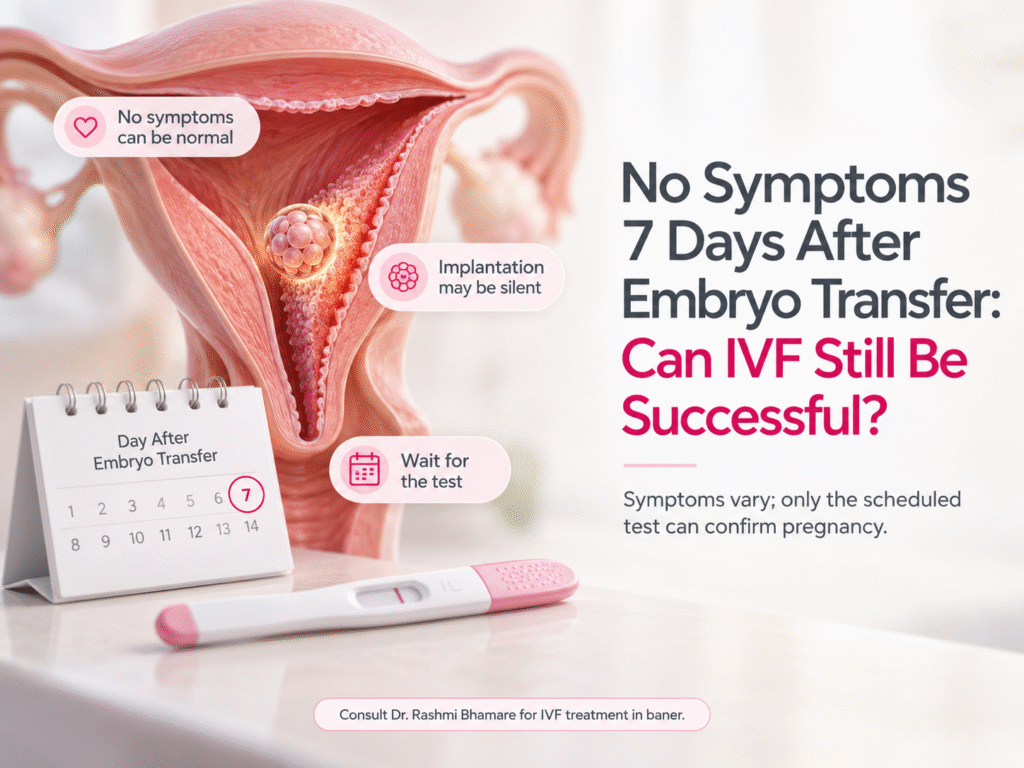
Yes, IVF can still be successful even if you have no pregnancy symptoms seven days after embryo transfer. The absence of cramping, spotting, breast tenderness or nausea does not automatically mean that implantation has failed. Some women experience noticeable changes during the waiting period, while others feel completely normal despite having a positive pregnancy test later.
After an embryo transfer, it is natural to pay attention to every physical change. However, symptoms alone cannot confirm whether pregnancy has occurred. The most reliable next step is to follow your fertility clinic’s instructions and take the scheduled pregnancy test.
Is It Normal to Have No Symptoms 7 Days After Embryo Transfer?
Yes. Having no symptoms seven days after embryo transfer is not unusual.
Early pregnancy symptoms vary considerably between individuals. Some women notice tiredness, breast tenderness or mild abdominal discomfort, while others experience no noticeable changes.
According to the NHS guidance on early pregnancy, a person may have no symptoms at all during the earliest stages of pregnancy.
This is especially relevant after IVF because the body may not yet have developed noticeable responses to pregnancy hormones.
It is also important to remember that experiencing symptoms does not guarantee success.
Neither the presence nor the absence of symptoms on day seven can reliably predict the outcome of an embryo transfer.
What Happens Inside Your Body During the First Week After Embryo Transfer?
After an embryo is placed inside the uterus, it must attach to the uterine lining through a process called implantation.
The timing depends partly on the developmental stage of the transferred embryo.
A day-three embryo is transferred at an earlier developmental stage, while a day-five blastocyst is more developed. This means the expected timing of implantation and pregnancy hormone detection can differ.
If implantation occurs and the pregnancy begins developing, the body produces human chorionic gonadotropin (hCG), commonly called the pregnancy hormone.
The amount of hCG generally increases during early pregnancy, but it may initially be too low for reliable detection.
Importantly, implantation does not necessarily produce noticeable physical sensations.
You cannot determine whether an embryo has implanted simply by checking for abdominal cramps, spotting or other symptoms.
Does No Cramping or Implantation Bleeding Mean IVF Has Failed?
No. Cramping and implantation bleeding are not required for a successful pregnancy.
Some women experience mild abdominal discomfort or light spotting after embryo transfer, but others do not.
Spotting may have several explanations, including minor irritation following the transfer procedure, vaginal progesterone use or bleeding associated with early pregnancy.
Likewise, mild cramping can occur for reasons unrelated to implantation.
Because these symptoms have several possible causes, they cannot reliably distinguish a successful embryo transfer from an unsuccessful one.
Not experiencing implantation bleeding should not be considered a negative sign.
If bleeding occurs, inform your fertility clinic and follow its advice. Heavy bleeding or severe pain requires prompt medical assessment.
Can IVF Medicines Cause Pregnancy-Like Symptoms?
Yes. Fertility medicines can produce symptoms that resemble early pregnancy.
Progesterone is commonly prescribed after embryo transfer to help support the uterine lining. Depending on the IVF protocol, other hormonal medicines may also be used.
Possible medication-related symptoms include:
- Breast tenderness or a feeling of fullness.
- Bloating, tiredness or mild nausea.
- Constipation, mood changes or abdominal discomfort.
However, not everyone experiences these side effects.
Some women tolerate progesterone without noticeable symptoms, even when taking it correctly.
This means breast tenderness or bloating cannot confirm pregnancy, and feeling completely normal does not indicate that the medicine is ineffective.
For additional information, read the clinic’s article on why progesterone is prescribed after IVF embryo transfer.
When Should You Take a Pregnancy Test After Embryo Transfer?
The correct testing date depends on your treatment protocol, embryo stage and the type of pregnancy test recommended by your fertility clinic.
Many IVF programmes schedule pregnancy testing approximately 10 to 14 days after embryo transfer, although some use different schedules.
A quantitative beta hCG blood test measures the pregnancy hormone in the bloodstream and can help determine whether pregnancy has begun.
Your doctor may recommend another blood test to assess how the hormone level changes over time.
Testing too early can produce misleading results.
A negative home pregnancy test on day seven may occur because hCG has not yet reached a detectable level.
Additionally, if an hCG trigger injection was used during treatment, residual medication can sometimes produce a false-positive pregnancy test.
The Guy’s and St Thomas’ NHS Foundation Trust advises patients to follow their assigned testing date because early testing can give unreliable results.
Do not assume IVF has failed because an early home pregnancy test is negative. Follow the test schedule given by your fertility specialist.
What Should You Do While Waiting for Your IVF Pregnancy Test?
The waiting period after embryo transfer can be emotionally demanding, especially when you are uncertain about the outcome.
Rather than repeatedly checking for symptoms, focus on following your treatment plan and maintaining your usual healthy routine.
Continue prescribed medicines exactly as instructed. Do not stop progesterone or other hormonal support simply because you have no pregnancy symptoms.
Most women can resume normal daily activities after embryo transfer, unless their fertility team has recommended specific restrictions.
Complete bed rest is generally unnecessary. The American Society for Reproductive Medicine advises against routine bed rest after embryo transfer because research has not demonstrated a benefit.
Eat regular, balanced meals, stay hydrated and get adequate sleep. Avoid smoking and alcohol, and follow your doctor’s instructions about physical activity and medicines.
If anxiety becomes difficult to manage, consider discussing your concerns with your fertility team or a qualified counsellor.
No particular symptom-checking routine can determine whether implantation has succeeded.
What Happens If the Pregnancy Test Is Positive but You Still Have No Symptoms?
A positive pregnancy test can occur even when you have no noticeable symptoms.
Your fertility specialist may recommend follow-up hCG testing or an ultrasound examination to assess the developing pregnancy.
A positive hCG result indicates that pregnancy hormone is present, but it does not independently confirm that the pregnancy is progressing normally or located inside the uterus.
An ultrasound is usually arranged later to confirm the pregnancy’s location and development.
The Cambridge University Hospitals’ post-embryo-transfer guidance describes follow-up ultrasound assessment at around seven weeks of pregnancy.
Continue your prescribed medicines until your fertility clinic advises otherwise.
When Should You Contact Your Fertility Specialist?
Having no symptoms alone is generally not a reason for an urgent medical visit.
However, certain symptoms after IVF should not be ignored.
Contact your fertility clinic promptly if you experience heavy vaginal bleeding, worsening abdominal pain, fever or significant abdominal swelling.
Seek emergency medical care for severe one-sided abdominal pain, shoulder-tip pain, fainting, chest pain or difficulty breathing.
These symptoms can occasionally indicate complications such as ectopic pregnancy or ovarian hyperstimulation syndrome.
The NHS IVF guidance recommends urgent assessment for symptoms suggesting these complications.
Do not wait for your scheduled pregnancy test if you develop severe or rapidly worsening symptoms.
Frequently Asked Questions
1. Is It Possible to Get a Positive Pregnancy Test With No Symptoms After Embryo Transfer?
Yes. Early pregnancy does not always cause noticeable symptoms. Some women receive positive pregnancy test results without experiencing nausea, cramping or breast tenderness. A properly timed pregnancy test is more informative than physical symptoms.
2. Does No Implantation Bleeding Mean the Embryo Did Not Attach?
No. Implantation does not always cause visible bleeding. Many pregnancies develop without spotting. Bleeding patterns cannot reliably confirm or rule out implantation.
3. Can I Take a Home Pregnancy Test 7 Days After a Day-Five Embryo Transfer?
You can physically perform a home test, but day seven may be earlier than your clinic’s recommended testing date. A negative result may be unreliable, while previous hCG medication can sometimes affect a positive result. Follow your fertility specialist’s scheduled testing instructions for a more dependable assessment.
Conclusion
Having no pregnancy symptoms seven days after embryo transfer does not mean IVF has failed. Some women experience early physical changes, while others feel completely normal before receiving a positive pregnancy test.
The absence of cramping, spotting, nausea or breast tenderness cannot predict implantation success. Continue prescribed medicines, follow your fertility clinic’s instructions and wait for the recommended pregnancy test.
If you have concerns about symptoms, medicines or the waiting period after embryo transfer, consult Dr. Rashmi Bhamare at 0 to 9 Women’s Care & Fertility Center for personalised fertility guidance.
For appropriate follow-up and guidance regarding IVF treatment in baner, discuss your embryo transfer concerns and pregnancy testing schedule with your fertility specialist.