
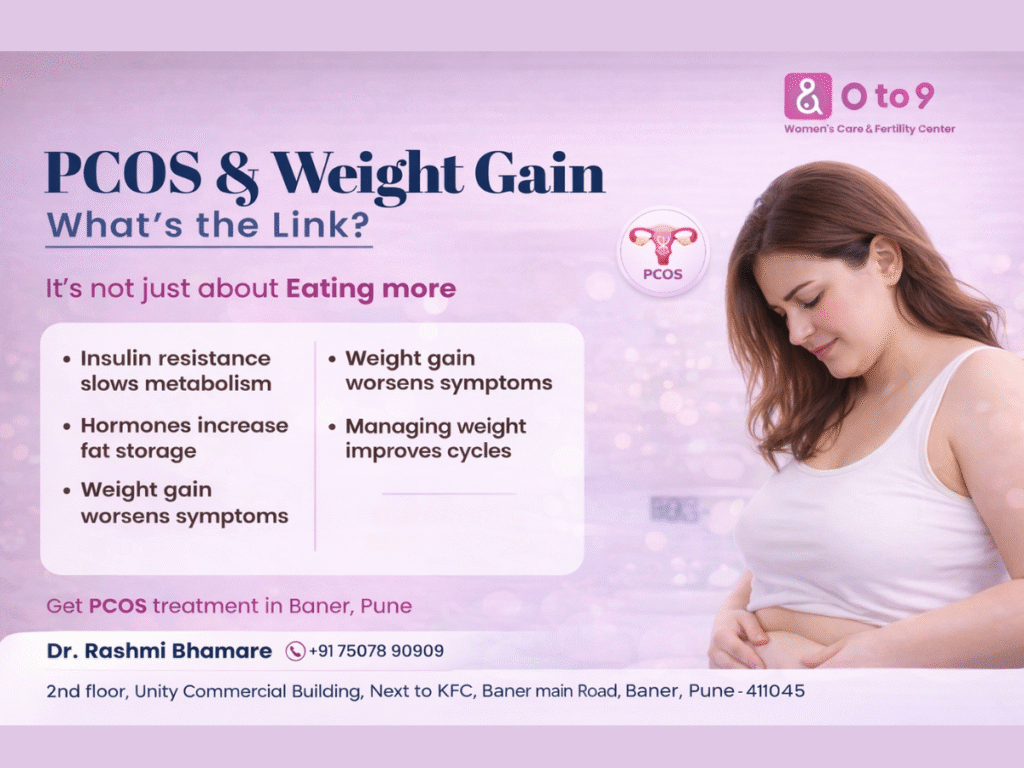
Weight gain that doesn’t make sense can feel frustrating—especially when you’re eating right and staying active. For many women dealing with polycystic ovary syndrome, this struggle is very real. The connection between PCOS and weight gain is not just about calories—it’s deeply rooted in hormones and metabolism.
At 0 to 9 Women’s Care & Fertility Center, Dr. Rashmi Bhamare focuses on helping women understand this connection and manage PCOS effectively with a personalized approach.
Understanding PCOS Beyond Symptoms
Polycystic Ovary Syndrome is a hormonal disorder that affects women during their reproductive years. While irregular periods, acne, and fertility issues are commonly discussed, weight gain is often the most distressing symptom.
What makes PCOS different is that the body behaves differently—your metabolism slows, hormones fluctuate, and fat storage increases, especially around the abdomen.
Why Does PCOS Lead to Weight Gain?
The Role of Insulin Resistance
One of the key reasons behind weight gain in PCOS is insulin resistance. This means the body struggles to use insulin effectively, leading to higher blood sugar levels. As a result, the body stores more fat instead of using glucose for energy.
This not only causes weight gain but also increases cravings—particularly for sugary and high-carb foods—making it even harder to maintain a healthy weight.
Hormonal Imbalance and Fat Storage
PCOS disrupts the balance of reproductive hormones. Increased levels of androgens (male hormones) can lead to:
- Increased fat accumulation
- Difficulty in losing weight
- Changes in body fat distribution
This is why many women notice stubborn belly fat that doesn’t respond to regular dieting.
The Vicious Cycle of PCOS and Weight Gain
PCOS and weight gain often create a cycle that feeds into itself:
- Hormonal imbalance leads to weight gain
- Weight gain worsens insulin resistance
- Increased insulin further disrupts hormones
Over time, this cycle can intensify symptoms like irregular periods, acne, and even fertility challenges.
Can Weight Loss Improve PCOS?
The encouraging news is that even a small amount of weight loss—around 5 to 10 percent of your body weight—can make a significant difference.
Women often experience:
- More regular menstrual cycles
- Improved ovulation
- Better hormonal balance
- Reduced risk of long-term complications
However, the goal should not be just weight loss, but restoring hormonal balance.
Effective Ways to Manage PCOS and Weight
1. Focus on a Balanced Diet
Choosing the right foods can improve insulin sensitivity. A diet rich in protein, fiber, and low glycemic index foods helps regulate blood sugar and reduce fat storage.
2. Stay Physically Active
A combination of strength training and cardio works best. Exercise improves metabolism and helps the body respond better to insulin.
3. Prioritize Medical Guidance
Every woman’s PCOS journey is different. Consulting an expert like Dr. Rashmi Bhamare ensures accurate diagnosis and a treatment plan tailored to your body’s needs.
4. Manage Stress Levels
Chronic stress increases cortisol, a hormone that can worsen both weight gain and PCOS symptoms. Incorporating relaxation techniques like yoga or meditation can help.
When Should You Seek Medical Help?
It’s important not to ignore the early signs. You should consult a specialist if you notice:
- Rapid or unexplained weight gain
- Irregular or missed periods
- Difficulty conceiving
- Persistent acne or excess hair growth
Early intervention can prevent complications and improve overall health outcomes.
Expert PCOS Care in Baner, Pune
At 0 to 9 Women’s Care & Fertility Center, patients receive comprehensive care designed to address both symptoms and root causes. With the expertise of Dr. Rashmi Bhamare, the focus is on long-term wellness, fertility support, and sustainable lifestyle changes.
Final Thoughts
Weight gain in polycystic ovary syndrome is not simply a result of lifestyle choices—it is a medical condition influenced by hormones, metabolism, and insulin resistance.
Understanding this connection is the first step toward better health.
Instead of focusing only on the scale, focus on balance—because when hormones are managed effectively, everything else begins to fall into place.