
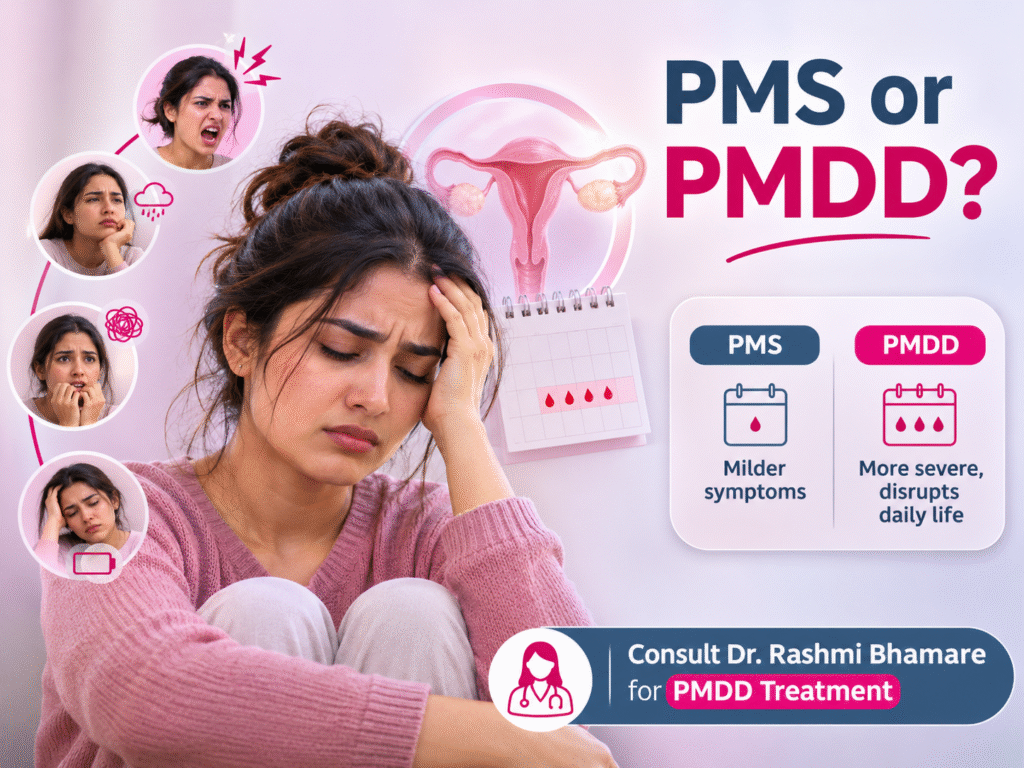
Severe mood changes before a period may be premenstrual dysphoric disorder (PMDD), particularly when they repeatedly disrupt work, relationships or everyday activities. However, symptoms alone cannot confirm the diagnosis. Their timing, severity and pattern across the month help distinguish PMDD from premenstrual syndrome (PMS) and other conditions. NHS
If this pattern sounds familiar, a consultation with a Gynecologist in Pune can help you describe what is happening and discuss an assessment. You do not need to wait until your symptoms become unbearable.
How Is PMDD Different From PMS?
PMS includes physical and emotional symptoms that appear before a period and usually improve once bleeding begins. These can include irritability, tiredness, bloating and breast tenderness. PMS itself can sometimes be severe. RCOG
PMDD has specific diagnostic criteria. These include at least five symptoms, with at least one prominent mood symptom such as marked irritability, anxiety, depressed mood or mood swings. The symptoms must cause significant distress or interfere with daily functioning. womenshealth.gov
Typically, symptoms are present in the final week before menstruation, improve within a few days after it begins, and become minimal or absent in the following week. A clinician checks the complete pattern and considers other explanations. NCBI Bookshelf
Having fewer than five symptoms does not mean you should dismiss distress or avoid seeking help.
Which Mood Changes Deserve Attention?
Symptoms worth discussing include:
- Intense irritability or anger that repeatedly affects relationships.
- Sadness, hopelessness, anxiety or feeling overwhelmed.
- Losing interest in usual activities or struggling to concentrate.
- Changes in sleep, appetite or energy alongside mood symptoms.
Physical symptoms such as headaches, bloating or breast tenderness may occur too. womenshealth.gov
Try describing the effect rather than only the emotion. For example, explain whether you miss work, withdraw from friends or find routine responsibilities difficult. These details help communicate how much support you need.
Why Can Normal Monthly Changes Feel So Difficult?
The exact cause of PMDD is not fully understood. Increased sensitivity to the natural changes in oestrogen and progesterone during the menstrual cycle may contribute. NHS
What If Anxiety or Depression Lasts All Month?
When symptoms remain present throughout the month but worsen before menstruation, a clinician may consider premenstrual exacerbation of an existing condition. This differs from a pattern in which symptoms largely settle between periods.
Depression or anxiety can also coexist with PMDD. Keeping track of better days as well as difficult days helps the clinician avoid attributing every symptom to the menstrual cycle. NCBI Bookshelf
How Should You Track Symptoms?
Keep a daily record for at least two menstrual cycles. A symptom diary can help confirm the pattern, although you can seek help before completing it. NHS
Useful entries include:
- Period dates and whether bleeding has started.
- Mood, sleep, energy, concentration and physical symptoms.
- How severe symptoms feel and how long they last.
- Their effect on work, relationships and everyday tasks.
A simple notebook is sufficient to begin recording this information. Bring it to your appointment along with a list of medicines and supplements. Your doctor may recommend a structured symptom questionnaire. medlineplus.gov
What Treatment Options May Help?
Treatment depends on the diagnosis, symptom severity, medical history and pregnancy plans.
Antidepressant medicines: Selective serotonin reuptake inhibitors, known as SSRIs, are established options for severe premenstrual symptoms. A clinician may prescribe them throughout the month or during a selected part of the cycle. Possible side effects include nausea, sleep changes and reduced sexual interest. Do not start, change or abruptly stop these medicines without medical guidance. RCOG
Hormonal treatment: Certain combined contraceptive pills may help, including formulations containing drospirenone. Suitability requires an individual discussion about benefits, risks and whether contraception is wanted. RCOG
Talking therapy and everyday support: Cognitive behavioural therapy (CBT) can help people develop skills to manage difficult feelings. Regular exercise, adequate sleep, a balanced diet and stress management may also help. Severe symptoms may require treatment beyond these measures. NHS
Continue recording symptoms during treatment so that follow-up appointments can assess whether it is helping. RCOG
When Is Urgent Help Needed?
Thoughts of suicide or self harm require prompt professional support. If you feel you may act on them or cannot stay safe, go to the nearest emergency department immediately and ask someone you trust to stay with you. Do not wait for your period or a routine appointment. medlineplus.gov
Frequently Asked Questions
Can a blood test confirm PMDD?
No single blood test confirms PMDD. Diagnosis depends on symptoms and their pattern. Tests may be recommended to investigate other explanations, such as a thyroid disorder, when appropriate. medlineplus.gov
Must symptoms disappear on the first day of bleeding?
No. Improvement can take a few days. The wider pattern matters, including whether symptoms become minimal or absent after menstruation. Persistent symptoms throughout the month warrant assessment for other or coexisting conditions. NCBI Bookshelf
What if I am trying to conceive?
Tell your clinician before choosing treatment. Pregnancy plans affect medication decisions, and contraceptive treatment will not suit someone actively trying to conceive. Discuss existing prescriptions before making changes. RCOG
Getting Help From a Gynecologist in Pune
You can discuss recurring menstrual mood changes with Dr. Rashmi Bhamare at 0 to 9 Women’s Care & Fertility Center. Bring your symptom record and explain what you most want help with. Ask whether coordinated care with a mental health professional would be useful.
#pmdd #pmsawareness #menstrualhealth #gynecologistinpune #0to9ivf