
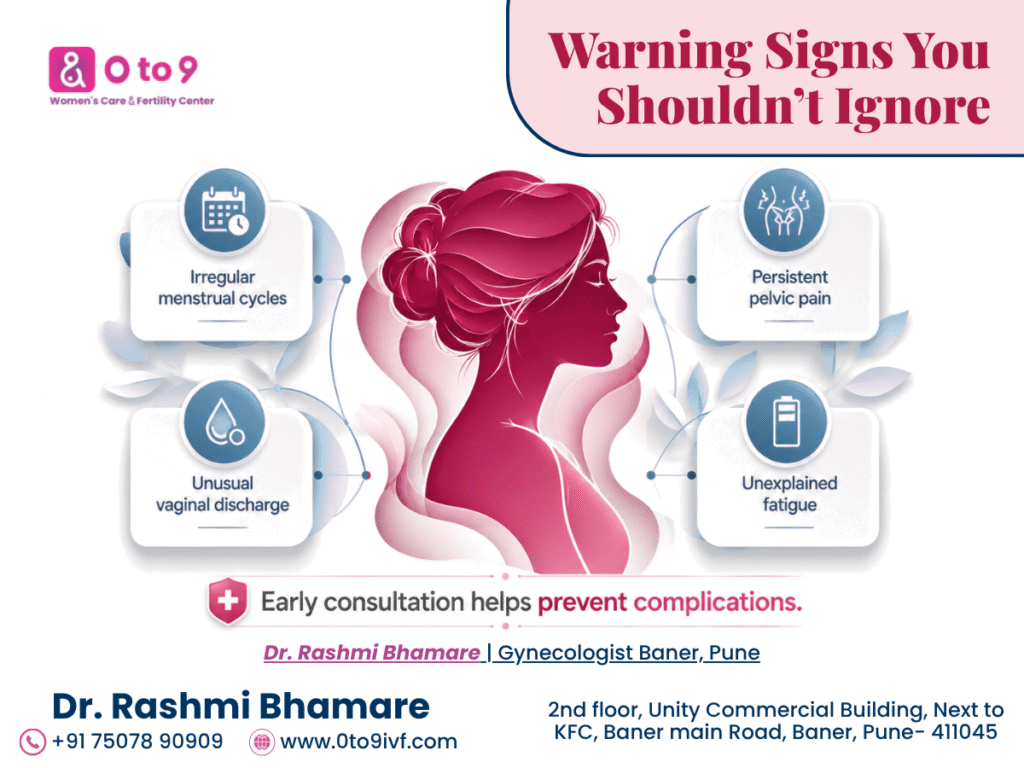
Women’s health concerns are often overlooked, delayed, or dismissed as a normal part of life. Many women tend to ignore symptoms such as irregular periods, pelvic pain, unusual discharge, or excessive fatigue, assuming they will resolve on their own. However, some symptoms can signal underlying gynecological conditions that require timely medical attention.
According to Dr. Rashmi Bhamre, early diagnosis and treatment play a vital role in maintaining reproductive health and preventing complications. Whether you are planning a family, seeking preventive care, or exploring options such as IVF treatment in Baner, understanding when to consult a gynecologist can make a significant difference to your overall well-being.
In this article, we discuss common women’s health symptoms that should never be ignored and explain when it is time to seek professional help.
Why Paying Attention to Women’s Health Symptoms Matters
Many gynecological conditions develop gradually and may not cause severe symptoms in the early stages. Conditions such as polycystic ovary syndrome (PCOS), endometriosis, uterine fibroids, cervical abnormalities, and reproductive infections can affect fertility, hormonal balance, and quality of life if left untreated.
The World Health Organization (WHO) highlights that reproductive and gynecological health is an essential part of women’s overall health and requires timely medical care and regular screening.
Source: https://www.who.int/health-topics/women-health
Recognizing warning signs early allows a gynecologist to diagnose the issue before it becomes more serious.
1. Irregular or Abnormal Menstrual Cycles
While menstrual cycles can vary slightly from month to month, consistently irregular periods should not be ignored.
Some warning signs include:
- Missing periods without pregnancy
- Periods occurring more frequently than every 21 days
- Cycles longer than 35 days
- Extremely heavy bleeding
- Bleeding between periods
- Menstrual bleeding lasting more than seven days
These symptoms may be associated with:
- PCOS
- Thyroid disorders
- Hormonal imbalances
- Uterine fibroids
- Endometriosis
A gynecologist can perform appropriate tests and recommend treatment to regulate your cycle and address the underlying cause.
2. Persistent Pelvic Pain
Occasional discomfort during menstruation is common. However, persistent or severe pelvic pain should always be evaluated.
Pelvic pain may indicate:
- Endometriosis
- Ovarian cysts
- Pelvic inflammatory disease
- Fibroids
- Urinary tract conditions
The American College of Obstetricians and Gynecologists states that chronic pelvic pain affects many women and often requires specialized evaluation to identify the underlying cause.
Source: https://www.acog.org/womens-health
If pelvic pain interferes with daily activities, work, or sleep, scheduling an appointment with a gynecologist is recommended.
3. Unusual Vaginal Discharge or Odor
Vaginal discharge is normal and helps maintain vaginal health. However, significant changes may signal an infection or other medical concern.
You should seek medical advice if you notice:
- Strong or unpleasant odor
- Green, yellow, or gray discharge
- Thick, cottage cheese-like discharge
- Itching or irritation
- Burning sensation during urination
These symptoms may be caused by bacterial infections, yeast infections, or sexually transmitted infections (STIs).
Early treatment helps prevent complications and discomfort.
4. Severe Menstrual Cramps That Affect Daily Life
Many women experience cramps during their menstrual cycle, but severe pain is not something you simply have to tolerate.
If you regularly:
- Miss work or school because of cramps
- Need strong pain medication every month
- Experience pain that worsens over time
It may indicate conditions such as endometriosis or adenomyosis.
Research published by the National Institutes of Health (NIH) shows that endometriosis affects approximately 10% of women of reproductive age worldwide.
Source: https://www.who.int/news-room/fact-sheets/detail/endometriosis
A gynecologist can assess your symptoms and recommend appropriate treatment options.
5. Unexplained Fertility Challenges
If you have been trying to conceive without success, it may be time to seek professional guidance.
Medical evaluation is generally recommended:
- After one year of trying if under age 35
- After six months if age 35 or older
Fertility difficulties can result from:
- Ovulation disorders
- PCOS
- Endometriosis
- Fallopian tube blockage
- Hormonal issues
Early fertility assessment can help identify potential obstacles and improve treatment outcomes.
6. Bleeding After Menopause
Any vaginal bleeding after menopause should be evaluated promptly.
Possible causes include:
- Hormonal changes
- Endometrial polyps
- Endometrial hyperplasia
- Endometrial cancer
The National Health Service (NHS) advises women to seek medical evaluation for any postmenopausal bleeding, as early diagnosis is essential.
Source: https://www.nhs.uk/conditions/post-menopausal-bleeding/
Although many causes are benign, it is important not to ignore this symptom.
7. Breast Changes That Need Attention
Women should also monitor their breast health regularly.
Consult a gynecologist or healthcare provider if you notice:
- New lumps or thickening
- Skin dimpling
- Changes in breast shape
- Nipple discharge
- Persistent breast pain
Regular screenings and prompt evaluation help detect potential concerns early.
When Should You Schedule a Gynecologist Visit?
Many women wait until symptoms become severe before seeking medical help. However, regular gynecological checkups can help detect health issues before they progress.
You should consider scheduling an appointment if you experience:
- Persistent pelvic pain
- Irregular periods
- Unusual vaginal discharge
- Fertility concerns
- Menopausal symptoms
- Changes in breast health
Routine preventive care, cervical screening, and reproductive health assessments are important for women of all ages.
The Importance of Regular Preventive Care
Preventive gynecological care is not only about treating illness. It also focuses on maintaining long-term health and wellness.
Regular visits can help with:
- Early detection of reproductive health conditions
- Family planning guidance
- Menstrual health management
- Fertility evaluation
- Menopause management
Building a trusted relationship with a gynecologist ensures that concerns are addressed early and appropriately.
Read More –
https://0to9ivf.com/10-signs-its-time-to-book-an-appointment-with-a-gynecologist/
Conclusion
Women’s bodies often provide important signals when something is not right. Symptoms such as irregular periods, pelvic pain, unusual discharge, severe cramps, fertility challenges, and postmenopausal bleeding should never be ignored. Seeking timely medical attention can lead to earlier diagnosis, more effective treatment, and better overall health outcomes.
If you are looking for expert women’s healthcare, 0 to 9 Women’s Care & Fertility Center offers comprehensive gynecological care tailored to every stage of a woman’s life. Under the guidance of Dr. Rashmi Bhamre, patients receive personalized care for menstrual disorders, fertility concerns, pregnancy care, preventive screenings, and reproductive health management. If you are searching for a trusted gynecologist in Baner, 0 to 9 Women’s Care & Fertility Center is committed to helping women achieve better health with compassionate and evidence-based care.
#GynecologistInBaner #WomensHealth #DrRashmiBhamre #FertilityCare #ReproductiveHealth #WomenWellness #PCOSAwareness #GynecologyCare #BanerPune #PreventiveHealthcare