
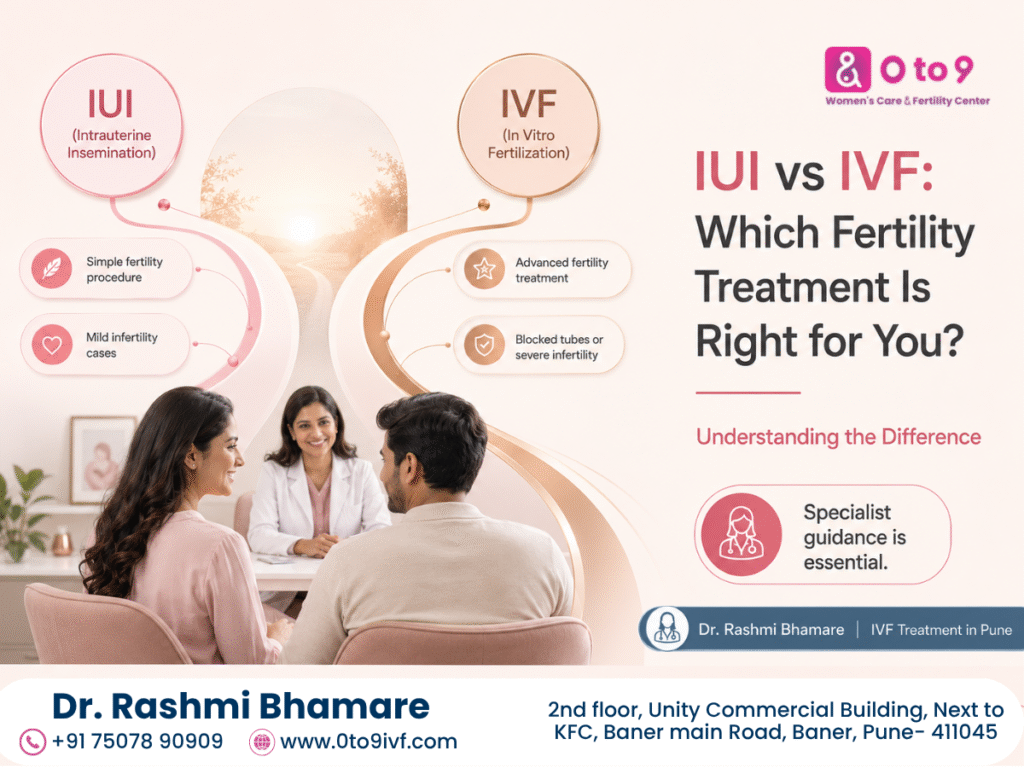
For couples struggling to conceive, choosing the right fertility treatment can feel overwhelming. Two of the most common assisted reproductive treatments are Intrauterine Insemination (IUI) and In Vitro Fertilization (IVF). While both are designed to help achieve pregnancy, they differ significantly in terms of procedure, success rates, cost, and suitability.
If you have been trying to conceive without success, consulting an experienced infertility specialist can help identify the underlying cause and guide you toward the most effective treatment option. It is also important to seek advice from a qualified gynecologist in Pune who can evaluate your reproductive health and recommend the most appropriate fertility plan.
In this article, Dr. Rashmi Bhamare explains the differences between IUI and IVF, their benefits, and how to determine which treatment may be right for you.
Understanding IUI and IVF
Before comparing the two treatments, it is important to understand what each procedure involves.
What Is IUI?
Intrauterine Insemination (IUI) is a relatively simple fertility treatment. During the procedure, specially prepared sperm is directly placed into the uterus around the time of ovulation. This increases the chances of sperm reaching and fertilizing the egg.
IUI is often recommended for:
- Mild male infertility
- Unexplained infertility
- Ovulation disorders
- Cervical mucus issues
- Couples using donor sperm
The procedure is minimally invasive and usually completed in a doctor’s clinic without anesthesia.
What Is IVF?
In Vitro Fertilization (IVF) is a more advanced fertility treatment. Eggs are retrieved from the ovaries and fertilized with sperm in a laboratory. The resulting embryo is then transferred into the uterus.
IVF may be recommended for:
- Blocked or damaged fallopian tubes
- Severe male factor infertility
- Advanced maternal age
- Endometriosis
- Recurrent pregnancy loss
- Failed IUI cycles
According to the American Society for Reproductive Medicine (ASRM), IVF has become one of the most effective fertility treatments available today.
Source: https://www.asrm.org
IUI vs IVF: Key Differences
Although both treatments aim to achieve pregnancy, there are several important differences.
| Factor | IUI | IVF |
| Procedure | Sperm placed inside uterus | Fertilization occurs in a laboratory. |
| Complexity | Simple and minimally invasive | More complex and involves egg retrieval |
| Cost | Lower | Higher |
| Success Rate | Generally lower | Generally higher |
| Treatment Duration | Shorter | Longer |
| Suitable For | Mild infertility cases | Moderate to severe infertility cases |
The choice between the two depends on factors such as age, fertility diagnosis, medical history, and treatment goals.
Success Rates: Which Treatment Works Better?
Success rates are often one of the biggest considerations for couples.
According to the U.S. Centers for Disease Control and Prevention (CDC), IVF generally offers significantly higher pregnancy rates compared to IUI, especially for women under 35 years of age.
Source: https://www.cdc.gov/art
IUI success rates typically range from 10% to 20% per cycle, depending on factors such as age and fertility diagnosis.
IVF success rates can range from 40% to 60% or higher in younger women, although outcomes vary based on individual circumstances.
An infertility specialist will assess factors such as ovarian reserve, sperm quality, and reproductive health before estimating your chances of success with either treatment.
When Is IUI the Right Choice?
IUI is often considered the first line of fertility treatment because it is less invasive and more affordable.
You may be a suitable candidate for IUI if:
- You are under 35 years of age
- Fallopian tubes are open and functioning
- Sperm quality is normal or only mildly affected
- You have unexplained infertility
- Ovulation can be achieved naturally or with medication
Many fertility experts recommend attempting several IUI cycles before considering IVF if no major fertility issues are identified.
When Is IVF the Better Option?
IVF may offer a faster and more effective route to pregnancy when more complex fertility issues are present.
Common situations where IVF may be recommended include:
- Blocked or severely damaged fallopian tubes
- Severe male infertility with low sperm count or motility
- Endometriosis affecting fertility
- Women over 35 with declining ovarian reserve
- Genetic testing requirements before pregnancy
- Multiple unsuccessful IUI attempts
Research published by the National Institutes of Health (NIH) shows that IVF can improve pregnancy outcomes in many cases of moderate to severe infertility.
Source: https://www.nih.gov
Factors Your Infertility Specialist Will Consider
Choosing between IUI and IVF is rarely a one size fits all decision. A skilled infertility specialist evaluates several factors before recommending treatment.
These include:
- Female age and ovarian reserve
- Duration of infertility
- Sperm health and quality
- Fallopian tube condition
- Hormonal balance
- Previous fertility treatment history
A personalized evaluation helps ensure the chosen treatment aligns with your medical needs and reproductive goals.
Cost Considerations
Cost can influence treatment decisions for many couples.
IUI is generally less expensive because it requires fewer medications and involves a simpler procedure. IVF requires ovarian stimulation, egg retrieval, laboratory fertilization, and embryo transfer, making it a larger financial investment.
However, higher success rates with IVF may sometimes make it more cost effective in the long term, particularly for couples facing significant fertility challenges.
Discussing treatment costs, expected outcomes, and timelines with an infertility specialist can help you make an informed decision.
Emotional and Physical Considerations
Fertility treatment is not only a medical journey but also an emotional one.
IUI typically involves less physical stress and fewer medications. IVF, while more intensive, may provide greater reassurance for couples seeking the highest possible chance of pregnancy per cycle.
Support from fertility specialists, counselors, and family members can make a significant difference throughout the treatment process.
Final Thoughts
Both IUI and IVF have helped millions of couples achieve their dream of parenthood. The right treatment depends on your unique fertility diagnosis, age, medical history, and personal preferences.
While IUI may be an excellent starting point for couples with mild fertility challenges, IVF often provides higher success rates for more complex cases. The most important step is seeking guidance from an experienced infertility specialist who can create a treatment plan tailored to your needs.
Why Choose 0to9 Women’s Care & Fertility Center?
At 0to9 Women’s Care & Fertility Center, Dr. Rashmi Bhamare and her team provide compassionate, evidence-based fertility care designed around each patient’s unique journey. From comprehensive fertility evaluations to advanced reproductive treatments, the clinic offers personalized support at every stage.
If you are looking for an experienced infertility specialist in Pune, 0to9 Women’s Care & Fertility Center can help you understand your options and choose the fertility treatment that offers the best chance of success for your family-building goals.
#InfertilitySpecialist #IVFTreatment #IUITreatment #FertilityCare #FertilityTreatment #IVFJourney #WomenHealth #InfertilitySpecialistInPune #DrRashmiBhamare #PuneHealthcare