
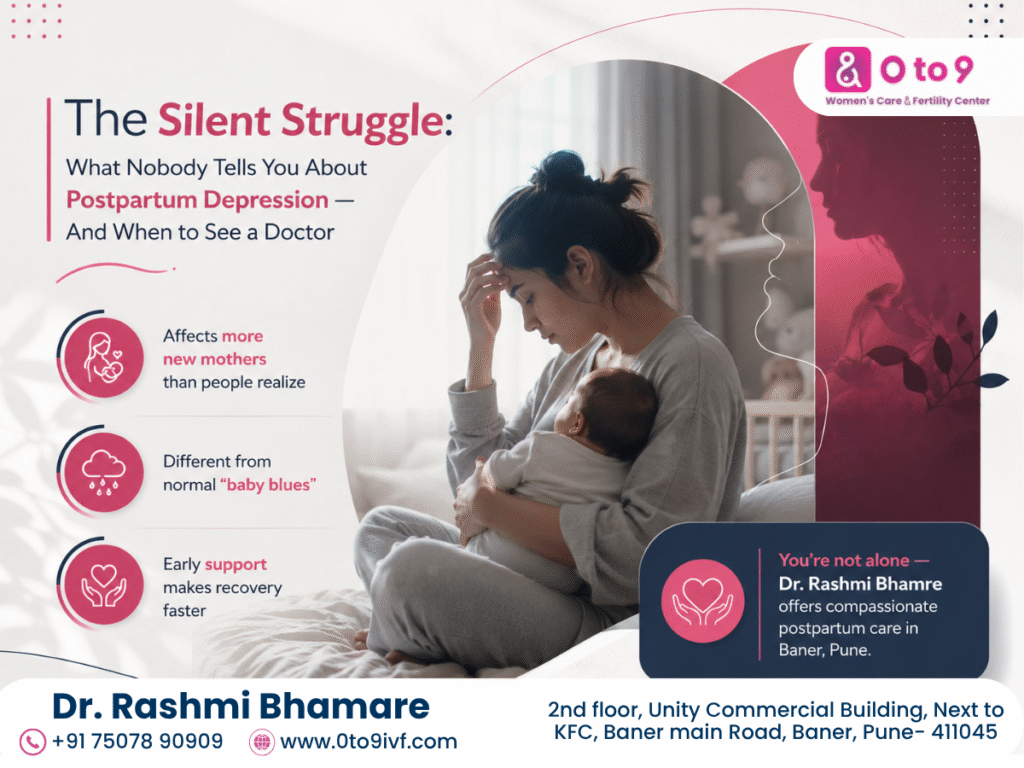
Bringing a baby home is supposed to feel like the happiest chapter of your life. So when a new mother finds herself crying for no reason, feeling numb instead of joyful, or struggling to bond with her own child, the guilt can be crushing. What most people don’t realize is that this experience is far more common, and far more treatable, than the silence around it suggests.
Postpartum depression (PPD) is not a character flaw, a sign of weakness, or something a mother “should be able to snap out of.” It is a genuine medical condition that deserves the same attention as any other health concern after childbirth.
How Common Is Postpartum Depression, Really?
If you feel alone in this, the numbers say otherwise. A large global meta-analysis covering 291 studies and nearly 3 lakh women across 56 countries found a pooled prevalence of postpartum depression of 17.7 percent, meaning almost one in six new mothers worldwide experiences it (NCBI, 2018: https://www.ncbi.nlm.nih.gov/pmc/articles/PMC5799244/).
Closer to home, research consistently shows that new mothers are at meaningfully elevated risk in the months following delivery. A French cohort study following more than 3,000 women found that nearly one in five developed a depressive episode within the first year postpartum (IGEDEPP cohort study: https://arxiv.org/pdf/2008.10382). In the United States, the CDC has reported that postpartum depressive symptoms affect roughly one in eight new mothers, translating to hundreds of thousands of women every year (CDC MMWR: https://www.cdc.gov/mmwr/volumes/66/wr/mm6606a1.htm).
What is particularly concerning is how often it goes unnoticed. The same CDC data shows that nearly 60 percent of women with depressive symptoms never receive a clinical diagnosis, and half of those who are diagnosed never receive treatment. This gap between suffering and support is exactly why conversations like this one matter, and why timely consultation with a gynecologist or mental health professional is so important.
Why Nobody Talks About It Openly
PPD often hides behind smiles in family photos and reassurances of “I’m just tired.” A few reasons this condition stays silent:
- Stigma and shame: Many mothers fear being judged as “bad parents” if they admit to negative feelings about motherhood.
- Confusing it with normal exhaustion: Sleep deprivation, hormonal shifts, and the sheer physical demands of caring for a newborn make it easy to dismiss symptoms as “just part of the process.”
- Lack of awareness among family members: Loved ones often expect a difficult first few weeks but don’t know where the line is between normal adjustment and a medical condition requiring care.
- Fear of medication or being separated from the baby: Some women worry that seeking help means being labeled “unfit” or being prescribed something that isn’t safe while breastfeeding.
Understanding these barriers is the first step toward breaking them.
The Baby Blues vs. Postpartum Depression: Know the Difference
It’s normal to feel weepy, anxious, or overwhelmed in the first two weeks after delivery. This is commonly called the “baby blues” and it usually resolves on its own as hormone levels stabilise.
Postpartum depression is different. It tends to last longer than two weeks, feels more intense, and can interfere with a mother’s ability to function or care for her baby. According to the American College of Obstetricians and Gynecologists, PPD symptoms can begin anytime within the first year after childbirth, not just in the initial weeks (ACOG Committee Opinion: https://www.sciencedirect.com/science/article/abs/pii/S0165032723001738), which is why ongoing screening at follow-up visits with your gynecologist is so valuable.
Symptoms Nobody Warns You About
Beyond the well-known signs like sadness and fatigue, many women experience symptoms that rarely make it into pamphlets or conversations:
- Intrusive, frightening thoughts about harm coming to the baby, which the mother would never act on but cannot stop imagining
- A sense of detachment or lack of connection with the baby, despite wanting to feel close
- Irritability or anger that feels out of character
- Loss of interest in things that used to bring joy, including intimacy or hobbies
- Physical symptoms such as unexplained aches, appetite changes, or racing heartbeat
- Difficulty concentrating or making even small decisions
- Withdrawing from friends, family, or social situations
These symptoms can feel confusing and frightening, especially because they clash so sharply with the expectation of instant maternal joy. Recognising them for what they are, and not as personal failure, is essential.
Who Is More Likely to Experience PPD?
Certain factors raise the risk, though PPD can affect any new mother regardless of background:
- A personal or family history of depression or anxiety, which can raise risk more than twentyfold
- Pregnancy complications such as gestational diabetes
- A difficult or traumatic delivery, including emergency caesarean sections
- Limited social support or a stressful home environment
- Mothers of multiples, who face notably higher rates than mothers of a single baby
If any of these apply to you or someone you love, staying alert to early symptoms and maintaining regular contact with your gynecologist can make a real difference.
When Should You See a Doctor?
This is the question most mothers hesitate to ask, often out of fear or embarrassment. As a general guide, it’s time to consult a doctor if:
- Sad, anxious, or empty feelings last more than two weeks
- You feel unable to care for yourself or your baby
- You have thoughts of harming yourself or your baby, which requires immediate medical attention
- Family members or your partner have noticed a significant change in your mood or behaviour
- You feel disconnected from your baby or overwhelmed by guilt that won’t lift
There is no need to wait for symptoms to become unbearable before reaching out. Early conversations with a qualified gynecologist can lead to quicker relief and prevent the condition from deepening.
Postpartum Depression Is Treatable
The encouraging truth is that with proper care, most women recover fully. Treatment may include counselling, support groups, lifestyle adjustments, and, when appropriate, medication that is safe during breastfeeding. Recovery rates are genuinely high once women receive appropriate support, which is exactly why speaking up early matters so much.
How 0 to 9 Women’s Care Clinic Can Support You
At 0 to 9 Women’s Care Clinic, we understand that postpartum care goes far beyond physical recovery. Under the guidance of Dr. Rashmi Bhamre, an experienced gynecologist in Pune, the clinic offers compassionate, judgement-free postpartum check-ups that look at both the body and the mind.
If you’re searching for a gynecologist in Pune who takes postpartum mental health as seriously as physical recovery, our team is here to listen, screen, and guide you toward the right support, whether that means counselling referrals, medical evaluation, or simply a reassuring conversation with someone who understands. No mother should have to carry this struggle silently. Reach out to Dr. Rashmi Bhamre and the team at 0 to 9 Women’s Care Clinic, because asking for help is one of the strongest things a new mother can do.
Read More –
- https://0to9ivf.com/4-lifestyle-factors-that-influence-fertility/
- https://0to9ivf.com/pregnancy-pains-understanding-round-ligament-pain-and-how-a-gynecologist-in-pune-can-help/
- https://0to9ivf.com/how-essential-oils-can-help-pregnant-women-relax-sleep-better-reduce-nausea/
Frequently Asked Questions
- How long does postpartum depression usually last?
Without treatment, postpartum depression can persist for several months or even longer, unlike the baby blues, which typically fade within two weeks. With proper care from a gynecologist or mental health professional, most women see noticeable improvement within a few weeks to months, and full recovery is common once treatment begins. - Is postpartum depression only common in the first few weeks after delivery?
No. While many people assume PPD strikes immediately after birth, medical guidelines note that symptoms can emerge anytime within the first year postpartum. This is why ongoing follow-up visits with a gynecologist, even months after delivery, remain important for catching delayed onset symptoms. - Can postpartum depression be treated without medication?
Yes, in many mild to moderate cases. Counselling, therapy, support groups, adequate rest, and family support can significantly ease symptoms. For more severe cases, a doctor may recommend medication that is safe during breastfeeding. The right approach depends on individual symptoms, which is best assessed through a proper consultation rather than self-diagnosis.
#PostpartumDepression #MaternalMentalHealth #NewMomSupport #GynecologistInPune #WomensHealth #MotherhoodJourney #MentalHealthMatters #PPDAwareness